Are Trade Agreements Increasing Global Income Inequality?
18 June 2026
Trade agreements. Just the phrase itself can spark heated debates in political arenas, economic circles, and even dinner table conversations. On the surface, they sound like a win-win, right? Countries come together, lower barriers, and trade more freely. The result? More opportunities, economic growth, and cheaper goods. But there's a catch—and it's a big one. People are starting to ask: _Are trade agreements increasing global income inequality?_ Let's dive deep and unpack this complex issue.
What Exactly Are Trade Agreements?
Before we go all-out economist mode, let’s make sure we’re on the same page.A trade agreement is a pact between two or more nations to reduce or eliminate tariffs, quotas, and other trade restrictions. The goal is to make international trade smoother and more predictable. These agreements can be bilateral (between two countries), multilateral (involving several countries), or regional (like NAFTA, now the USMCA, or the EU).
In theory, it’s all about boosting economic activity. But the impact on income distribution? Well, that’s where things start to get a bit fuzzy.
The Sweet Side: Trade Agreements and Economic Growth
Let’s start with the positives. There’s no denying that trade agreements can:- Open up access to larger markets
- Increase the efficiency of production
- Drive innovation by increasing competition
- Provide consumers with cheaper and more diverse products
All of this usually translates to higher economic growth. For example, when China joined the World Trade Organization in 2001, its economy exploded. GDP soared. Exports ballooned. Poverty, especially extreme poverty, plummeted. Sounds amazing, right?
But here comes the twist.
The Bitter Pill: Who's Actually Benefiting?
Yeah, the national economy grows. But who exactly is getting richer?Let’s say your country signs a trade agreement with a lower-wage country. Companies back home might move factories abroad to cut costs. The result? More profits for shareholders and top executives. But what about the factory workers who just lost their jobs?
Here’s the kicker: many trade agreements often lead to job displacement in industries that can’t compete globally. And guess who these jobs usually belong to? Yep—middle- and lower-income workers.
Meanwhile, those with high-level skills, or capital to invest, usually gain. That creates a growing gap between the rich and the rest.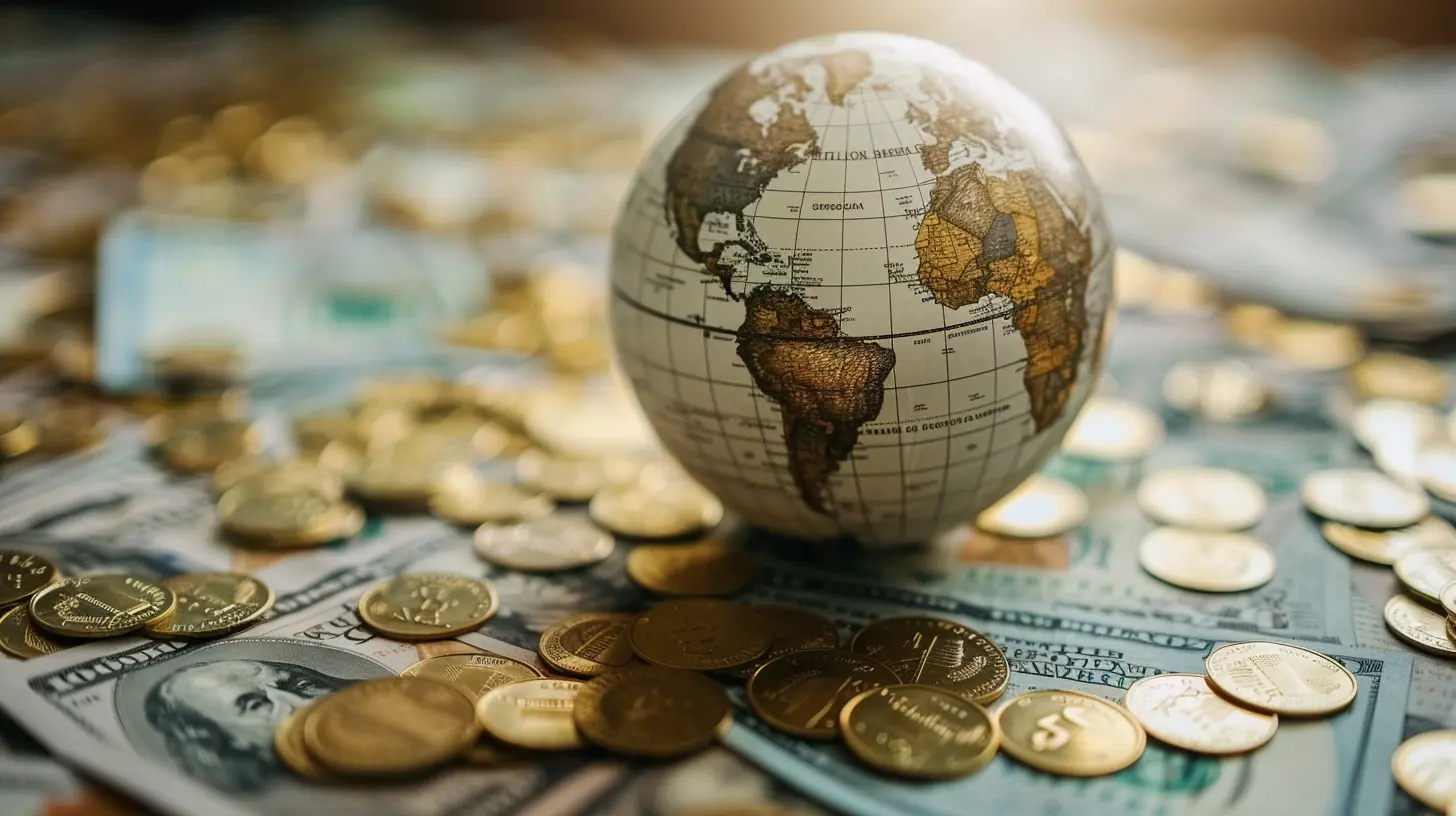
Income Inequality: A Global Perspective
We're not talking about just one country here. This is a global trend.Developed Nations
In developed countries like the U.S., U.K., and parts of Europe, income inequality has been climbing since the 1980s. Trade liberalization played a role. Manufacturing jobs were shipped overseas. Wages stagnated for low-skilled workers. Wealth accumulated at the top.It’s not just about job loss—it’s also about wage suppression. When companies can outsource jobs, they have more power to keep domestic wages low.
Developing Nations
Now, you might think developing countries are 100% winning from trade deals. And in many ways, they are. New jobs, foreign investment, and tech transfer—all good stuff.But even here, benefits aren’t spread evenly. Cities and industries integrated into global markets boom. Rural areas or sectors not involved in trade? Not so much.
So, while overall poverty may fall, income inequality often increases within these countries too.
The Role of Multinational Corporations
Here’s an elephant in the room we can’t ignore: multinational corporations (MNCs).When trade barriers drop, big players move fast. They set up shop where they can pay the least and gain the most. And they love countries with low taxation, cheap labor, and lax regulations.
Sure, they create jobs. But these jobs are often low-paying with minimal worker protections. MNCs also funnel profits back home or stash them in tax havens, rather than reinvesting locally.
So what happens? The rich get richer, and the poorest stay stuck.
The Political Side of Things
Let’s get real. Trade agreements aren’t just economic tools; they’re deeply political.They’re often negotiated behind closed doors, with major lobbyists and corporate reps at the table. How much say does the average worker, farmer, or small business owner have in these talks? (Hint: not much.)
This lack of inclusivity can result in deals that benefit large corporations at the expense of small, local industries. In the political sphere, this imbalance can lead to public distrust, populism, and even economic nationalism.
The Race to the Bottom Effect
Ever heard of a “race to the bottom”?It happens when countries compete to attract business by lowering labor standards, environmental protections, or corporate taxes. Think of it like a limbo contest—how low can you go?
Trade agreements can unintentionally encourage this kind of race, especially when they don’t include strong enforcement mechanisms for labor and environmental standards.
This might boost short-term investment, but it often leaves workers worse off and widens the gap between owners and laborers.
Can Trade Agreements Be Made More Fair?
Absolutely—but it’s going to take a shift in priorities.1. Include Labor and Environmental Protections
Strong, enforceable clauses that protect workers' rights and the environment can help keep the playing field level.2. Emphasize Transparency
Opening up the negotiation process to public scrutiny can ensure more voices are heard—especially those from marginalized communities.3. Redistribute the Gains
Governments can use tax revenues from increased trade to invest in education, job retraining, and social safety nets.4. Support Affected Industries
Offering transition support to industries and regions hit hard by trade can reduce the long-term damage.When these kinds of policies are baked into trade deals, they have a better chance of minimizing inequality and maximizing shared prosperity.
Real-Life Case Studies
Let’s look at a couple of real-world examples to paint the picture more clearly.NAFTA (Now USMCA)
The North American Free Trade Agreement is one of the most well-known trade deals. It increased trade between the U.S., Canada, and Mexico, but it also led to massive job losses in certain U.S. industries, especially manufacturing. In Mexico, it led to job growth, but mostly in low-wage sectors.Result? Mixed economic results, but increased inequality in both the U.S. and Mexico.
The China Shock
After China joined the WTO, many Western countries saw a flood of cheap imports. Entire industries in the U.S. Midwest collapsed. Economists now refer to this as “The China Shock.” It increased overall global economic output but also led to deep social and regional inequalities.Technology vs. Trade: Who’s Really to Blame?
Now, it’s only fair to mention that not all inequality stems from trade. Technology is another major player.Automation, AI, and robotics have also replaced millions of jobs. In many cases, it’s hard to separate the impact of trade from that of tech.
But here’s the thing: Trade and technology often go hand-in-hand. Companies that expand globally are usually the first to adopt new tech to stay competitive. So, one fuels the other.
At the end of the day, both forces are reshaping our economies—fast.
Final Thoughts: So, Are Trade Agreements Increasing Global Income Inequality?
Short answer? They can—and in many cases, they already have.Trade agreements are like a double-edged sword. While they can lift entire nations out of poverty and boost global GDP, they can also deepen the divide between the rich and the poor—both within and across countries.
The tricky part is balance. Well-designed trade agreements, paired with strong domestic policies, can help minimize the harms and spread the benefits more fairly.
But if we keep going down the path of “growth at all costs,” we’re likely to see inequality rise.
So the next time you hear about a new trade deal, ask yourself: Who’s gaining, who’s losing, and what’s being done to level the playing field?
all images in this post were generated using AI tools
Category:
Income InequalityAuthor:

Zavier Larsen
Discussion
rate this article
1 comments
Lysander McNeil
This article raises important points about trade agreements and their impact on inequality. It's crucial to examine how these policies shape our world. I appreciate the thoughtful analysis and look forward to more discussions on this topic.
June 26, 2026 at 2:37 AM
Zavier Larsen
Thank you for your thoughts. I'm glad you found the analysis valuable, and I look forward to continuing the conversation on this important issue.