How Economic Crises Widen the Income Gap
21 March 2026
Let’s be real—economic crises have a nasty habit of shaking things up like a Red Bull-fueled toddler with a snow globe. But while everyone might feel the tremors, not everyone tumbles the same way. If you’ve ever wondered why your billionaire neighbor seems to come out of a recession with a new yacht while you’re just trying to hang onto your apartment—well, you're not alone.
Grab a coffee (or something stronger), and let’s dive into the wild world of economic crises and how they love making the rich richer and the rest of us... well, not so much.
🌪 What the Heck Is an Economic Crisis Anyway?
Before we start pointing fingers, let’s make sure we’re all on the same page. An economic crisis is basically the economy's equivalent of a nervous breakdown. It happens when stuff like unemployment, inflation, financial system meltdowns, or housing crashes hit hard—and everybody starts panicking.Think Great Depression style... or the 2008 Financial Crisis... or, more recently, the 2020 COVID-19 economic chaos. These aren't just blips on the radar—they’re full-blown storms that throw the economy into a tailspin.
But while the whole plane feels the turbulence, only economy class seems to lose their peanuts. The folks in first class? They’re sipping champagne like nothing happened.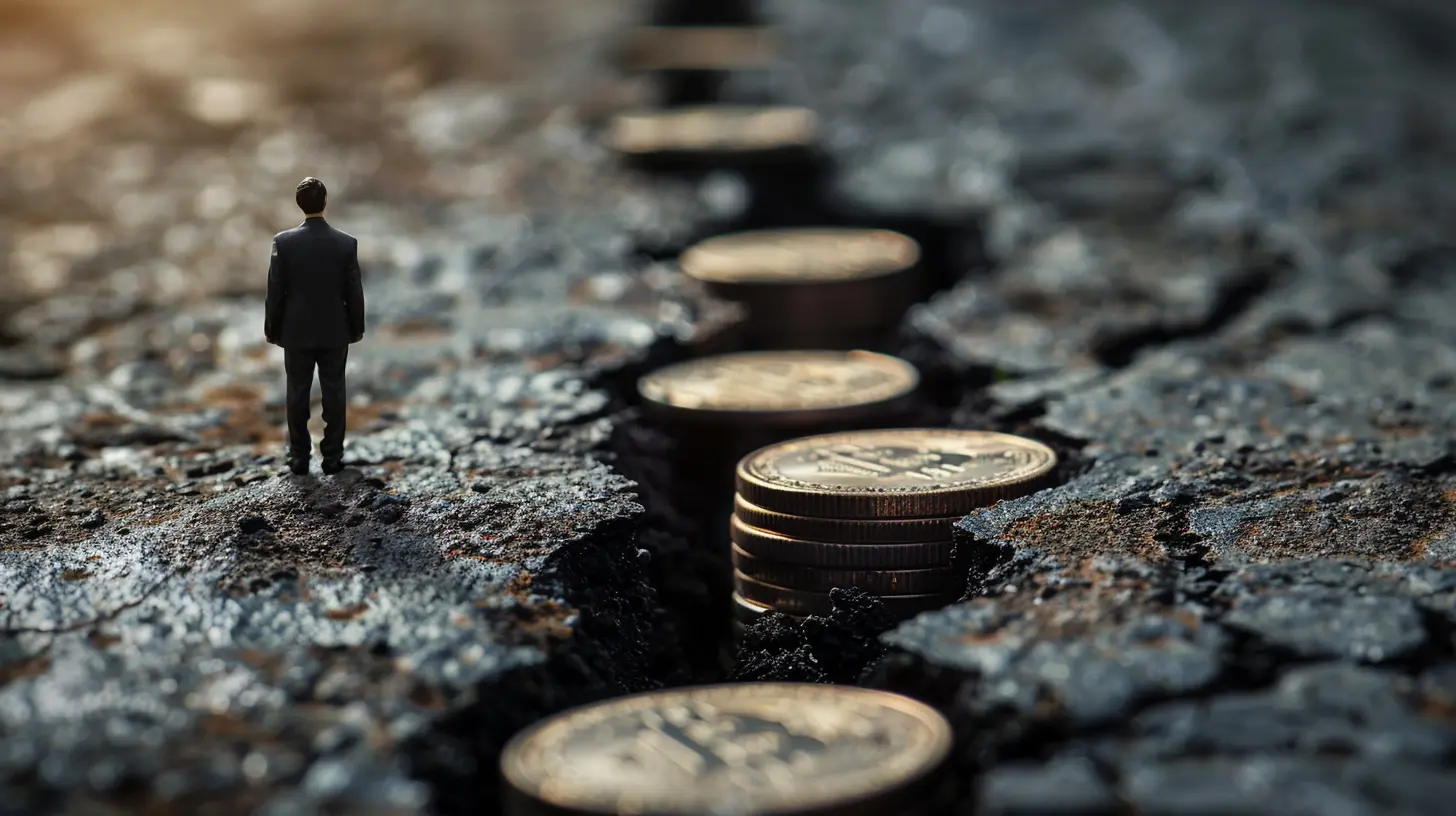
📉 Crises Don't Play Nice — Unless You're Already Winning
You’d think that when the economy nosedives, everyone takes a hit, right?Nope. Not even close.
Let’s break it down:
1. Job Losses Hit Low-Income Workers First (and Hardest)
When businesses start slashing costs, layoffs are the first tool out of the toolbox. But guess who gets the axe first?It’s not the CEO with three assistants and a corner office. It’s the part-time barista, the warehouse worker, the single mom juggling two jobs.
Meanwhile, high-income folks—especially those working cushy WFH jobs—barely flinch. They tweet about “pivoting” and “investing in themselves” while others are Googling how to file for unemployment.
2. Asset Owners Catch the Bounce, Renters Watch from Below
It’s a tale as old as Wall Street: “Buy the dip!”Wealthy individuals own assets—stocks, real estate, businesses. When the market crashes, they scoop up assets at fire-sale prices, and when the economy recovers, boom! They’re richer than ever.
Regular folks? They might not have extra cash to ride the stock market rollercoaster. Worse, they might have to sell what little they have... at a loss.
It’s like musical chairs. The rich buy extra chairs while the music’s off. When it starts up again? Well, guess who’s still standing.
💳 The Credit Trap: Champagne Taste, Soda Budget
Economic downturns whack incomes but don’t touch bills. That means millions turn to credit—racking up debt just to survive.Now, here's where it gets spicy: Interest rates on credit cards and payday loans are no joke. So while upper-income earners snag low-interest loans to buy homes and invest, middle- and lower-income households pay through the nose just to keep the lights on.
It's the financial version of trying to climb a down escalator... that someone keeps speeding up.
🏦 Government “Help” — Band-Aids on Bullet Wounds?
Ah yes, stimulus checks. Relief packages. Unemployment benefits.Government help often comes with good intentions but mixed results. While some support does trickle down, a lot of the benefits are structured in ways that—surprise!—end up favoring the already wealthy.
Example? Quantitative easing. Sounds fancy, right? All it means is the central bank is pumping money into the financial system. Cool, except most of that flows into the stock market, helping people who already owned stocks. (Spoiler alert: that's not most of us.)
Meanwhile, social safety nets often leave out gig workers, immigrants, or part-time employees—the ones who actually need it most.
👶 Generational Impact — The Snowball Keeps Rolling
Think economic crises are a one-time event? Think again. These things echo through generations.Let’s say a working-class family pulls their kids out of college because they can’t afford tuition during a recession. That decision might save money short-term, but it limits earning potential for decades.
Now stack that against a wealthy family whose kid is still in private school and gets a trust fund at 21. See the problem?
Crises don’t just widen the gap today—they set the stage for continued inequality tomorrow.
💰 Why Wealth Builds (or Explodes) During Crises
Here’s where it gets really interesting. Wealth doesn’t just survive economic crises—it often thrives.1. Fewer Bargain Hunters, More Power Plays
When prices drop, most people panic. But the rich? They treat it like Black Friday.Buying assets at discounted prices means HUGE returns when things rebound. It’s like buying a Picasso at a garage sale because everyone else was too broke to bid.
2. Access to “Inside” Opportunities
Ever notice how new money-making opportunities don't exactly get advertised in the classifieds? Wealthy folks get early info, better advisors, and exclusive access. Hedge funds, private equity, startup investments—these doors are closed to the average Joe.So while some are selling their PlayStations to make rent, others are scooping up distressed properties for pennies and flipping them on Instagram six months later.
3. Tax Laws Play Favorites
Want to get mad? Take a look at how taxes work during—and after—economic downturns.Capital gains (money made from investments) are often taxed less than regular income. That means if you made a fortune flipping houses or riding the stock market bounce, you could pay less tax than someone working two jobs.
During economic downturns, governments may even lower corporate taxes or offer business incentives, essentially handing the wealthy a loyalty card with cashback rewards.
🛠 Can Anything Be Done?
Okay, now that we've all screamed into the void together, let's talk solutions.There are a few ways to slow the income gap tsunami:
- Progressive taxation: Tax systems that make the ultra-wealthy pay a fair share? Sounds dreamy.
- Stronger safety nets: UBI, healthcare, free education—these aren’t just cool buzzwords.
- Financial literacy: Everyone should know how to budget, save, and invest—regardless of income.
- Access to affordable credit: Because paying 27% interest to borrow $500 should be illegal. Full stop.
- Raise the minimum wage: It hasn’t kept up with inflation. Like, not even close. We’re talking boomer-era rates.
But let's be honest, most of these ideas depend on political will. And politics... well, that’s a whole other article. Or Netflix miniseries.
👀 So What Should You Do?
You can’t singlehandedly fix income inequality, but you can armor up.Here are a few power moves:
- Build an emergency fund. Seriously. Even $500 gives you more options in a crisis.
- Learn how investing works. Start small, but just start.
- Stay up-to-date with financial news. The more you know, the less likely you’ll get blindsided.
- Side hustle with strategy. Temporary gig work is fine, but think long-term. Build skills, not just hours.
- Vote like your wallet depends on it. Because, spoiler: it DOES.
🧠 Final Thoughts: Why the Income Gap Matters (and What We Can Do)
It’s not just about jealousy or playing the blame game. A widening income gap affects literally everything—public health, crime rates, education, even how long we live.When only a tiny slice of the population holds most of the wealth, society gets unstable. And unstable societies don’t make great places to raise kids, start businesses, or binge-watch Netflix in peace.
So the next time someone tells you, “We’re all in the same boat,” kindly remind them that some boats have engines, champagne, and lifeboats, while others are floating on driftwood with a hole in the bottom.
And if enough people speak up, vote smart, and demand better? Well, maybe we can all upgrade to a boat with seat cushions.
all images in this post were generated using AI tools
Category:
Income InequalityAuthor:

Zavier Larsen
Discussion
rate this article
2 comments
Hailey McDowell
This article brilliantly highlights the impact of economic crises on income disparity! It's a crucial reminder of the need for inclusive solutions. Together, we can bridge the gap and create a more equitable future for all!
April 5, 2026 at 2:26 AM
Zavier Larsen
Thank you for your thoughtful comment! I'm glad the article resonated with you. Addressing income disparity is indeed vital for a fair future.
Allegra McElroy
Economic crises exacerbate income inequality by disproportionately affecting low-income households through job loss and reduced access to resources while enabling wealthier individuals to capitalize on distressed assets, thereby widening the income gap.
March 26, 2026 at 5:01 AM
Zavier Larsen
Thank you for your insightful comment! You're absolutely right—economic crises tend to impact vulnerable populations more severely, while wealthier individuals often find opportunities to expand their assets. This dynamic indeed contributes significantly to widening the income gap.