How Tax Policies Worsen the Income Gap
22 January 2026
When we talk about the growing income gap, it’s impossible to ignore the role tax policies play in that widening crack between the rich and everyone else. At first glance, taxes may seem like a neutral tool — the government takes a slice of everyone’s pie, right? But take a closer look, and you’ll see the slices aren’t exactly equal. In fact, some folks are getting served way more pie than others, and tax laws are handing them the bigger plates.
Yeah, we're diving deep into how tax policies — the very ones that are supposed to help balance inequality — often do the opposite. Whether you're just curious, frustrated by your paycheck, or wondering why billionaires pay less in taxes than you do (hint: they probably do), you're in the right place.
The Basics: What Are Tax Policies Anyway?
Before we get too deep, let’s break it down. Tax policies are the laws and rules that determine how much individuals and businesses pay in taxes. They include income tax, sales tax, corporate tax, capital gains tax, and even tax credits and deductions.But here's the kicker: how those rules are written determines who gets a break — and who doesn't.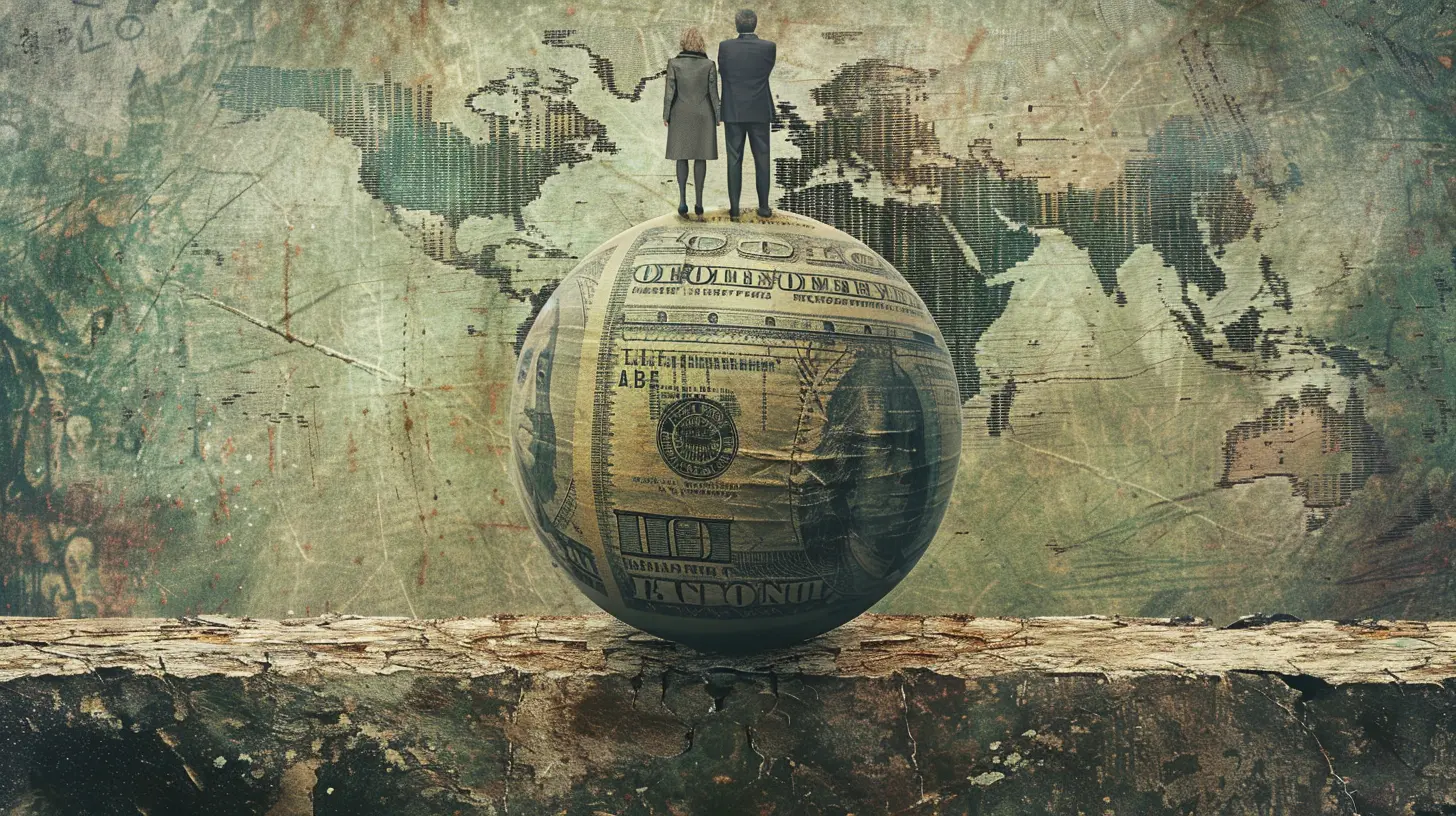
The Big Picture: Income Inequality Is Growing
We’ve all heard the stats. The top 1% holds more wealth than the bottom 90%. And it’s not just numbers on a graph — it’s people working two jobs and still struggling to pay rent, while others are riding rockets to space.The gap between the rich and poor isn't just about salaries — it's about wealth. Wealth includes investments, inherited money, real estate, and more. And tax laws directly influence how that wealth grows, or doesn’t.
Regressive vs. Progressive Tax Systems: A Quick Primer
Not all taxes are created equal. There are two major types to know:Progressive Taxes
These are the ones where the more you earn, the more you pay. Think of income tax brackets — if you make more, you’re taxed at a higher rate. This sounds fair, right?Regressive Taxes
These hit lower-income folks harder. Sales taxes are a good example. If a billionaire and a cashier both buy the same pair of shoes, they pay the same sales tax. But that money means a lot more to the cashier.So, when tax systems lean regressive, lower-income people end up paying a bigger chunk of their income. And sadly, many tax policies — especially at the state and local levels — are heavily regressive.
Tax Loopholes: Legal But Inequitable
Now let’s talk about the backdoors in the tax code. Wealthy individuals and big corporations have armies of lawyers and accountants helping them find ways to reduce their tax bills. These loopholes are perfectly legal — and wildly unfair.Capital Gains Are Taxed Less Than Income
If you work 9 to 5 and earn a paycheck, that’s taxed as ordinary income.But if you're wealthy and earning money from investments (like stocks or real estate), those gains — called "capital gains" — are often taxed at a lower rate. That means someone making millions from stocks could pay a lower tax rate than a nurse or a teacher.
How’s that for upside-down?
The Carried Interest Loophole
This one’s a doozy. It allows hedge fund managers to classify their income as capital gains, not regular income. That gives them a much lower tax rate. It’s like being able to call your pizza a salad and arguing it’s healthy.What About Corporate Taxes?
Big corporations often pay shockingly low taxes. Some even pay zero. That's right — zero. Thanks to deductions, credits, and offshore tax havens, many large companies legally dodge billions in taxes each year.And while these companies rake in profits and reward shareholders, working-class taxpayers shoulder more of the load for public services — schools, roads, emergency services, you name it.
Shifting the Burden: How the Middle Class Pays More
Here's a fun fact — and by fun, we mean frustrating — over the past few decades, the share of tax revenue coming from individuals (instead of corporations) has skyrocketed.So while corporate taxes as a percentage of government revenue have dropped, personal income and payroll taxes have picked up the slack. Translation? You’re paying more, and they’re paying less.
Wealth Transfer Through Tax Code
Another sneaky way tax policy contributes to inequality? Inheritance and estate taxes — or rather, their reduction.The estate tax used to apply to fortunes passed down to heirs over a certain threshold. But that threshold has increased dramatically, meaning fewer estates pay taxes when wealth is passed down. That makes it easier for rich families to stay rich.
Meanwhile, working-class folks don’t get those golden handshakes. They start from scratch — or worse, debt.
State and Local Tax Systems: Even More Regressive
Think the federal level is bad? State and local tax policies can be even harsher on low-income families.Sales taxes, gas taxes, and even property taxes often take a bigger bite out of a lower earner’s wallet. Some states don’t even have income taxes, relying heavily on sales taxes, which disproportionately hurt the poor.
In contrast, wealthier residents can often structure their finances to avoid or minimize these taxes. It’s like showing up to a race and finding out some people are driving Ferraris while you’re on foot.
Tax Cuts for the Wealthy: A Recurring Theme
Let’s be real — tax cuts aren’t inherently evil. But when they favor the wealthy and corporations under the promise of “trickle-down economics,” we’ve got problems.Remember the Bush Tax Cuts?
They heavily favored the highest earners. And the argument was: “They’ll invest more and create jobs.” Spoiler alert: inequality spiked instead.Then Came the Trump Tax Cuts
Same story, different year. The 2017 Tax Cuts and Jobs Act slashed corporate tax rates and gave big breaks to the wealthy.What did we get? Record stock buybacks. That's when companies buy their own stock to boost share prices — not hire more people or raise wages.
Meanwhile, the average worker got crumbs — temporary relief that’s already disappearing.
The Psychological Trap: Who’s Really to Blame?
It’s easy to get mad at “the system,” but tax policy often flies under the radar in political debates. Why? Because it’s complex, and the language used is confusing on purpose.Also, many of us believe we might “make it rich” one day, so we don’t want high taxes waiting for us when we do. But let’s be real: the odds of becoming a billionaire are lower than being struck by lightning twice.
Meanwhile, the current system keeps lifting the top further out of reach.
What Can Be Done?
Alright, enough of the doom and gloom. What can be done to make things fair?1. Close Loopholes
Crack down on tax shelters, offshore accounts, and shady deductions. If you're making money, you should contribute your fair share — period.2. Increase Capital Gains Taxes
Tax investment income like regular income. If you make a million dollars from stock trading, you shouldn’t pay less tax than someone working 60 hours a week.3. Reinstate a Strong Estate Tax
Wealth shouldn’t be able to multiply across generations without contributing back to the system that made it possible.4. Make the Tax Code Simpler and Transparent
We need policies that are easy to understand — not written like a riddle in an escape room.5. Push for Progressive State Tax Policies
States can revise their tax structures to lighten the load on middle- and low-income residents — and ask more from those who can afford it.Final Thoughts: Taxes Shouldn’t Make Inequality Worse
Here’s the truth: Taxes are meant to fund public goods and services, right? Schools, healthcare, infrastructure, emergency services — all the stuff we rely on daily.But when tax policies are tilted to benefit the rich, they don’t just fail to reduce inequality — they actually feed it.
And while the wealthy keep stacking their chips, the rest of us are left to split the bill. That’s not just unfair — it’s unsustainable.
So, let’s keep asking the tough questions. Follow the money. Push for fairer policies. Because how we tax says a lot about what — and who — we value.
all images in this post were generated using AI tools
Category:
Income InequalityAuthor:

Zavier Larsen
Discussion
rate this article
2 comments
Rivera Harmon
Empower yourself with knowledge! Understanding tax policies is the first step toward fostering change. Together, we can advocate for a fairer financial future for everyone.
February 21, 2026 at 11:42 AM
Zavier Larsen
Absolutely! Knowledge is key to driving change in tax policies and addressing the income gap. Together, we can advocate for a fairer financial future.
Emmeline Benton
Great insights! This article highlights the critical link between tax policies and income inequality. It might be helpful to include specific examples or case studies to illustrate how different policies impact various income groups, making the argument even more compelling.
January 23, 2026 at 4:43 AM
Zavier Larsen
Thank you for your feedback! I appreciate your suggestion, and I'll consider incorporating specific examples and case studies in future articles to strengthen the argument.