How to Backtest Your Day Trading Strategies
10 July 2026
Trading without backtesting is like driving a car with a blindfold on—you’re heading somewhere, but you have no idea if you’ll get there in one piece. If you’re serious about day trading, backtesting your strategies is not an option; it’s a necessity.
Backtesting allows you to analyze how a trading strategy would have performed in the past using historical data. It gives you insight into whether your approach has potential or if it’s just wishful thinking.
In this guide, we’ll break down everything you need to know about backtesting your day trading strategies so you can make informed, confident trades. 
What is Backtesting in Day Trading?
Backtesting is the process of applying a trading strategy to historical market data to gauge its effectiveness. Think of it as a "test drive" before you risk real money. If your strategy worked well in the past, there’s a higher chance it will work in the future—though, of course, past performance is never a guarantee of future results.Imagine you're an athlete training for a marathon. Before race day, you run practice laps, analyze your times, tweak your diet, and adjust your training. Backtesting does the same for your trading strategies. It helps you refine your approach and eliminate costly mistakes before putting your hard-earned money on the line. 
Why is Backtesting Important?
Backtesting isn’t just a fancy technique—it’s a powerful tool that can set you apart from losing traders. Here’s why it’s crucial:1. Validates Your Strategy
Would you jump out of a plane with an untested parachute? Probably not. The same logic applies to trading. Without backtesting, you’re essentially gambling. Testing your strategy on historical data helps confirm whether it’s worth using in live markets.2. Boosts Confidence
Nothing kills a trader’s confidence faster than a series of unexpected losses. Backtesting helps you build trust in your strategy so you can execute trades with conviction rather than second-guessing every move.3. Identifies Weaknesses
No strategy is bulletproof. Backtesting exposes the flaws in your approach before they cost you money. If a strategy consistently loses money in historical testing, you can ditch it or tweak it before risking real capital.4. Helps with Risk Management
Smart traders don’t just focus on profits—they also minimize risks. Backtesting gives you key statistics, such as maximum drawdowns and win rates, so you can adjust your position sizing and risk tolerance accordingly.
How to Backtest Your Day Trading Strategies
Let’s get into the nitty-gritty of how to properly backtest a day trading strategy. Follow these steps to ensure you're doing it the right way:1. Define Your Trading Strategy
Before you start testing, you need a clear plan. Outline your trading strategy in detail, including:- Entry rules (What triggers a trade?)
- Exit rules (When do you take profits or cut losses?)
- Stop-loss and take-profit levels
- Timeframe (Are you trading 5-minute charts, 15-minute charts, or something else?)
- Indicators (Moving averages, RSI, MACD, etc.)
A vague plan leads to vague results, so be as specific as possible.
2. Gather Historical Data
To backtest effectively, you need high-quality historical price data. Many trading platforms, such as TradingView, MetaTrader, and ThinkorSwim, provide historical charts. Some even offer replay functions so you can manually simulate trades.Ensure the data includes:
- Price action (open, high, low, close prices)
- Volume data
- Market conditions (bullish, bearish, sideways trends)
The more detailed the data, the more accurate your backtesting results will be.
3. Manually or Automatically Backtest
There are two ways to backtest a strategy:Manual Backtesting
This means moving through historical charts one candle at a time, noting trade setups and recording the outcome. It’s more time-consuming but helps you better understand price action and market behavior.Automated Backtesting
If you’re into coding, you can automate your backtesting using tools like Python, Pine Script (for TradingView), or MetaTrader's Expert Advisors. This allows you to scan years of data in minutes.4. Record Your Results
Data is useless if you don’t analyze it. Keep a trading journal with key metrics such as:- Total number of trades
- Win/loss rate
- Average profit per trade
- Maximum drawdown
- Risk-reward ratio
This information helps fine-tune your strategy and make data-driven adjustments.
5. Analyze and Optimize Your Strategy
Once you’ve collected enough data, it’s time to dig into the numbers. Look for patterns and answer important questions like:- Does the strategy work better in certain market conditions?
- Are there specific times of the day when it performs best?
- Does adjusting stop-loss and take-profit levels improve results?
If your strategy is showing promise, consider forward testing it in a demo account before committing real money.
6. Factor in Slippage and Fees
One big mistake traders make when backtesting is ignoring real-world trading costs. When you go live, slippage and trading fees can eat into your profits.Let’s say your backtesting results show a 2% average profit per trade. But if you’re paying 0.5% in fees and losing another 0.5% to slippage, your "real" profit might only be 1%. Always factor in these costs for a more realistic expectation. 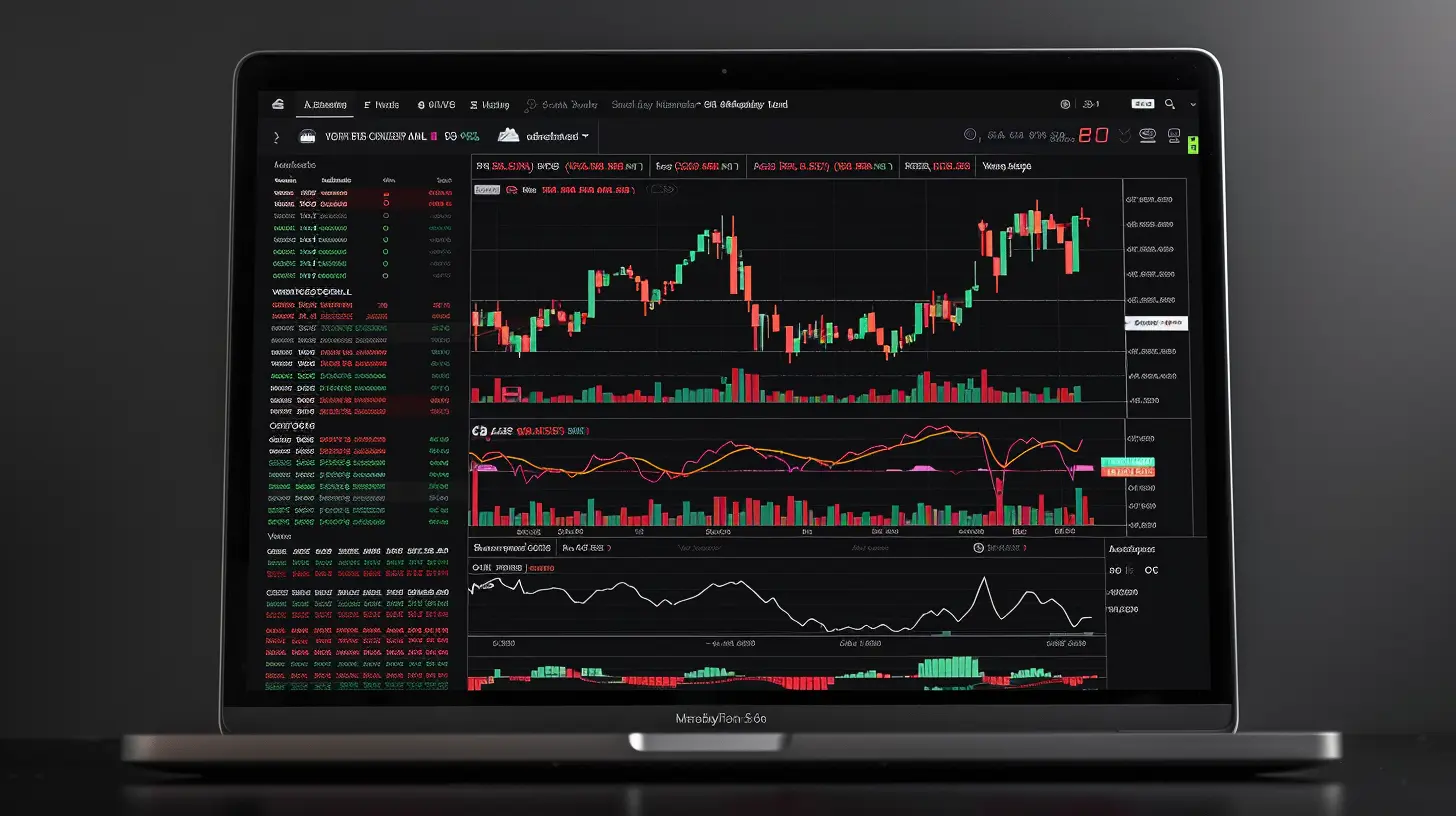
Common Backtesting Mistakes to Avoid
Even the best traders make mistakes when backtesting. Here are some pitfalls to watch out for:1. Overfitting the Strategy
If you tweak your strategy too much to fit past data perfectly, it might not work in real markets. A strategy that "looks perfect" in backtesting may actually be useless in real-time trading.2. Ignoring Market Conditions
A strategy that worked in a trending market may fail in a range-bound market. Always test across different conditions.3. Cherry-Picking Trades
If you only count the trades that support your strategy and ignore the losing ones, you’ll get false confidence. Be honest with your results.4. Not Testing Enough Trades
Testing your strategy on just a handful of trades isn’t enough. Aim for at least 100-200 trades to get a solid statistical sample.Final Thoughts
Backtesting is like having a crystal ball—but instead of seeing the future, you get a glimpse into how your strategy might perform based on the past. While it's not foolproof, it significantly increases your chances of success.Remember, the goal of backtesting isn’t to find a strategy that never loses (those don’t exist), but to develop one with a solid edge. The more effort you put into properly backtesting your approach, the more confident and successful you’ll be in the live markets.
So, if you’re serious about day trading, don’t skip this step. Get your strategy, test it, refine it, and trade with confidence. Your future self will thank you.
all images in this post were generated using AI tools
Category:
Day Trading BasicsAuthor:

Zavier Larsen
Discussion
rate this article
1 comments
Nolan Collins
Great insights in this article! Backtesting is such a crucial step for day traders to refine their strategies and boost confidence. I appreciate how you broke down the process into manageable steps. Looking forward to implementing these tips in my own trading!
July 12, 2026 at 3:06 AM
Zavier Larsen
Thanks for the kind words! I'm glad you found the breakdown helpful. Best of luck with your trading!