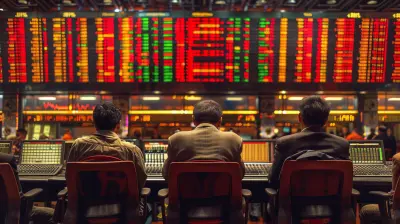
How to Stay the Course During Economic Uncertainty
11 October 2026
Let's be brutally honest about something most finance writers dance around: nobody actually knows what the economy will do next. Not the Federal Reserve chair, not the hedge fund managers charging 2 and 20, not the guy on YouTube with the rented Lamborghini and the crash prediction you've seen eleven times this month. If anyone truly knew, they'd be quietly compounding their fortune on a beach somewhere, not selling you a newsletter.
So when I tell you to "stay the course" during economic uncertainty, I'm not asking you to be naive. I'm asking you to be smart enough to recognize that panic is expensive, and that the people selling certainty are almost always selling something else.
This article is about how to hold your investment strategy together when the headlines scream recession, when your portfolio is bleeding, when your neighbor swears gold is the only real money, and when every instinct tells you to do something, anything. We'll talk about what actually works, what doesn't, and why the difference between the two is rarely obvious in the moment.
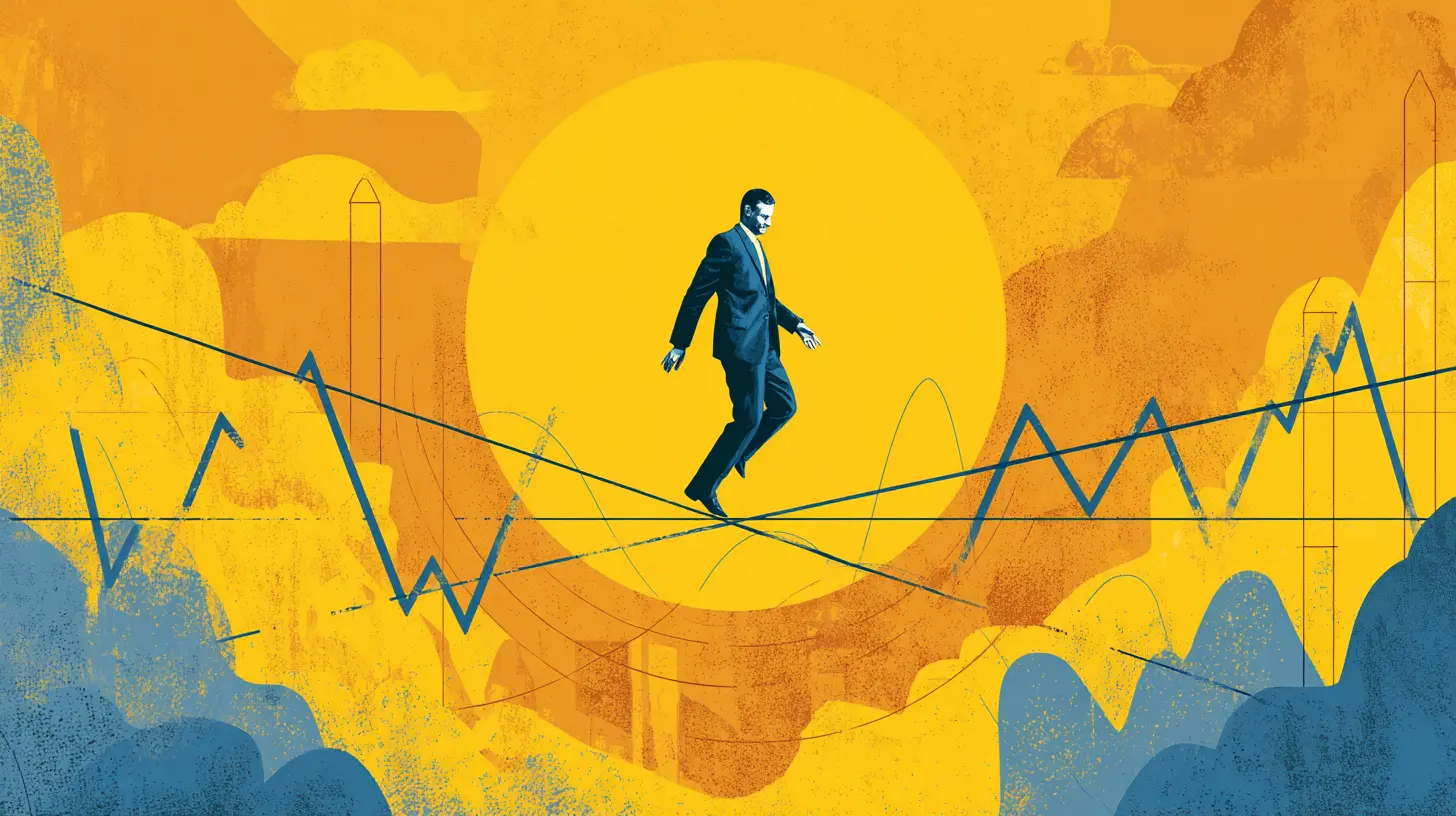
Why "Staying the Course" Is Harder Than It Sounds
The phrase gets tossed around like it's simple. It isn't. Staying the course requires you to sit still while your net worth drops, while your friends brag about their winning trades, and while your own brain floods you with cortisol every time you open your brokerage app.There's a reason for that. Human beings are pattern-seeking, loss-averse creatures. We evolved to react fast to threats. That instinct kept our ancestors alive on the savanna. In a 401(k), it's a liability.
Behavioral finance researchers have documented what they call the disposition effect: investors tend to sell winners too early and hold losers too long, largely because realizing a loss feels like admitting failure. Add in recency bias, the tendency to assume recent trends will continue, and you get a recipe for buying high and selling low on repeat.
So no, staying the course isn't a personality trait. It's a discipline. And like any discipline, it's built on systems, not willpower.

What Economic Uncertainty Actually Means for Your Money
Uncertainty is not the same thing as disaster. This distinction matters more than almost anything else in this article.When economists say uncertainty is high, they mean the range of possible outcomes has widened. It doesn't mean the bad outcome is certain. It means the future is harder to forecast. Markets hate that, which is why volatility spikes. But volatility and permanent loss are two completely different animals.
Consider what actually drives long-term returns: corporate earnings, productivity growth, innovation, demographic shifts, and capital allocation. None of those things stop because a jobs report came in hotter than expected or because a central bank raised rates by 25 basis points.
Here's the uncomfortable truth: the economy and the stock market are not the same thing. They're related, but they move on different clocks. Recessions have coincided with strong market years, and booming economies have coexisted with flat or negative returns. Anyone who tells you a recession guarantees a market crash is oversimplifying to the point of being wrong.
What uncertainty does change is the cost of being wrong. When outcomes are wide-ranging, poor decisions get punished harder. That's why your behavior during these periods matters more than your predictions.
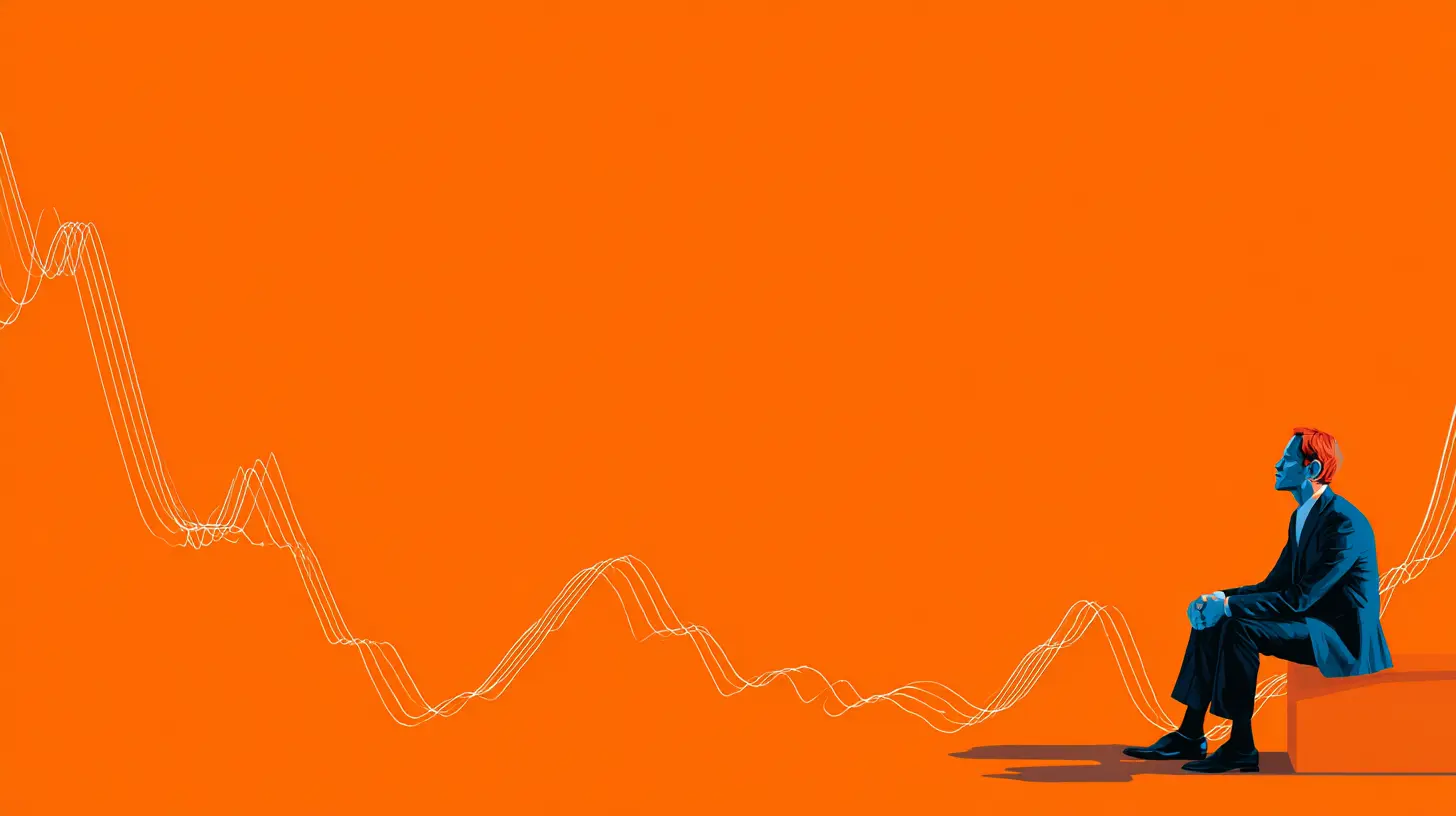
The Real Enemy Is You, Not the Market
Let me put this bluntly. Over a 30-year investing horizon, the market will hand you a decent return if you just show up and don't do anything stupid. The "don't do anything stupid" part is where most people fail.Think about what happens in a downturn. The S&P 500 drops 20 percent. Financial media goes into overdrive. Your brother-in-law starts talking about the end of the dollar. You log into your account, see a number that's five figures lower than it was three months ago, and your brain screams: do something.
So you sell. You move to cash. You feel relief for about two weeks. Then the market rallies 15 percent without you, and now you're stuck waiting for a pullback that may never come. You've locked in your losses and missed the recovery. Congratulations, you've just paid a tuition fee to the market for a lesson you didn't need.
This pattern is so common it has a name: the behavior gap. It refers to the difference between investment returns and investor returns. Studies have suggested that the average investor underperforms the very funds they invest in, largely because of poorly timed buying and selling. The gap can be several percentage points per year, which compounds into a devastating shortfall over decades.
The market doesn't need to beat you. You'll beat yourself if you let it.
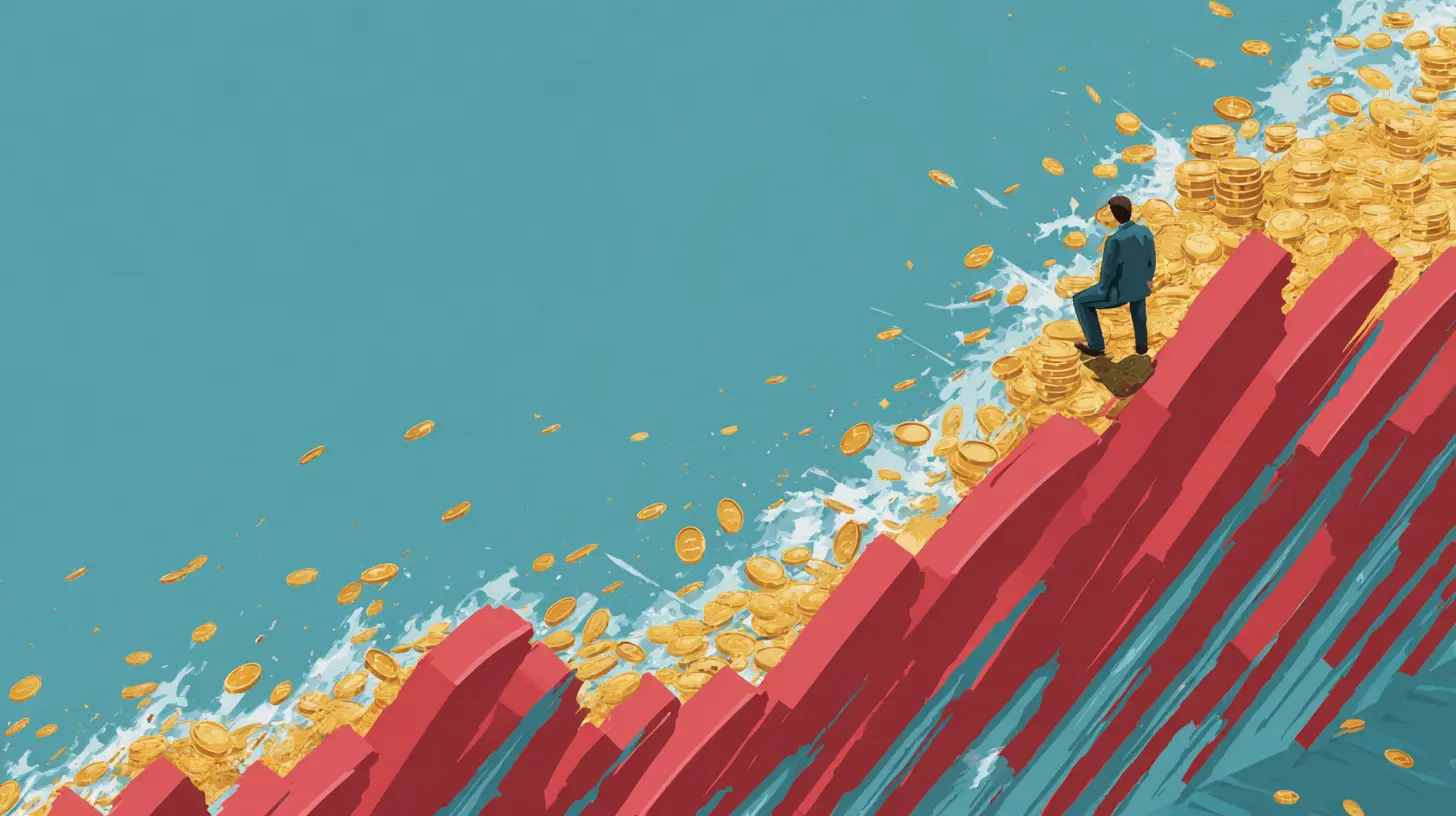
Build a Framework Before You Need It
The time to decide how you'll behave in a crisis is before the crisis. Not during. During, you're not thinking clearly, and your decision-making is compromised.Here's a framework that works.
Define Your Time Horizon Explicitly
Money you need in the next two years should not be in stocks. Full stop. If you're saving for a house down payment in 18 months and you've got it in an index fund, you're not investing, you're gambling. The market could drop 30 percent right before you need the cash, and you have no time to recover.Money you won't touch for 10, 20, or 30 years is a different story. That money can and should ride out volatility, because history suggests that over long periods, diversified equity exposure has tended to grow. Not guaranteed. Tended. That distinction matters.
Write your time horizon down. Physically. On paper. Tape it to your monitor. When you're tempted to sell, look at it. If the money isn't needed for a decade, short-term market moves are noise.
Match Your Asset Allocation to Your Actual Risk Tolerance
Risk tolerance is not what you say you can handle. It's what you actually do when your portfolio is down 35 percent. Most people overestimate their tolerance until they're tested.A useful exercise: imagine your portfolio at half its current value. Not down 10 percent. Down 50. Ask yourself honestly whether you'd sell, hold, or buy more. If the answer is sell, your allocation is too aggressive. Dial it back. There's no shame in holding more bonds or cash if it keeps you invested and sane.
The goal isn't to maximize returns in theory. It's to maximize returns you'll actually capture in practice, which means an allocation you can stick with through a bear market.
Automate Contributions and Ignore the Noise
Dollar-cost averaging, investing a fixed amount at regular intervals regardless of market conditions, is one of the few strategies that works precisely because it removes emotion from the equation. When the market drops, your fixed contribution buys more shares. When it rises, it buys fewer. Over time, this smooths your entry price and, more importantly, keeps you in the game.Set up automatic transfers. Then delete the brokerage app from your phone. Seriously. Checking your portfolio daily during a downturn is a form of self-harm. You get no useful information and a lot of anxiety. Once a quarter is plenty for most people.
Why Panic Selling Is Mathematically Catastrophic
Let's talk numbers, because this is where the stakes become clear.Suppose you have $100,000 invested. The market drops 25 percent. You panic and sell at $75,000. To get back to $100,000, you need a 33 percent gain from that point. But you're in cash, so you need to time your re-entry perfectly.
Now suppose instead you held. The market recovers 33 percent from the bottom. You're back to $100,000. Same endpoint, but you didn't have to guess when to get back in. And here's the kicker: some of the market's best days cluster right after its worst days. Miss those, and your long-term returns suffer disproportionately.
This is why market timing is so dangerous. It's not that timing never works. It's that you have to be right twice, on the way out and on the way back in, and the second decision is often harder than the first because you're terrified of another leg down.
The math of missing the best days is brutal. Even missing a handful of the strongest recovery days can meaningfully reduce your total return over a multi-decade period. This isn't a hypothetical. It's a well-documented pattern in market data. Staying invested is not a slogan. It's a mathematically superior strategy for anyone who can't reliably predict the future, which is everyone.
Real-World Scenarios: How This Plays Out
Let's walk through a few concrete situations.Scenario One: The 2008 Financial Crisis
An investor with a diversified portfolio watched the S&P 500 fall roughly 50 percent from its 2007 peak to its 2009 trough. Terrifying. If they sold at the bottom, they locked in catastrophic losses. If they held and kept contributing, they bought shares at depressed prices and participated in a recovery that, over the following decade, more than made up the drawdown.The lesson isn't that everything always recovers. Japan's Nikkei took decades to return to its 1989 peak, which is a real and sobering counterexample. But a globally diversified portfolio is not a single country's index. Diversification across geographies and asset classes exists precisely to reduce the risk that one market's lost decade becomes your lost decade.
Scenario Two: The 2020 COVID Crash
Markets fell roughly 34 percent in about a month. Then they recovered most of it within months and went on to new highs. Investors who sold in March 2020 based on fear of a prolonged depression missed one of the sharpest recoveries in market history.Nobody knew in March 2020 how it would play out. That's the point. The people who did best weren't geniuses. They were disciplined.
Scenario Three: A High-Inflation Environment
When inflation runs hot, bonds suffer and cash loses purchasing power. Investors get tempted to pile into commodities, real estate, or inflation-protected securities. Some of that makes sense as a hedge. But rotating your entire portfolio based on a headline inflation number is usually a mistake, because by the time inflation is obvious, markets have often already priced it in.The takeaway across all three scenarios: the specific crisis matters less than your response to it.
Common Mistakes and Misconceptions
Let's clear up some persistent nonsense.Misconception one: "This time is different." Every crisis feels unprecedented. Some genuinely are, like a global pandemic. But the market's ability to eventually adapt and recover has been a recurring feature across centuries of financial history. That doesn't mean every crash recovers quickly, but it means betting against long-term human productivity has historically been a losing wager.
Misconception two: "Cash is safe." Cash is safe from nominal loss. It is not safe from inflation. If inflation runs at 5 percent and your savings account pays 1 percent, you're losing 4 percent of purchasing power annually. Safety and preservation are not the same thing.
Misconception three: "I'll get back in when things calm down." Things rarely feel calm at market bottoms. They feel terrible. By the time the coast looks clear, prices have usually risen substantially. Waiting for comfort is a strategy for buying high.
Mistake one: Checking your portfolio constantly. This increases anxiety and the likelihood of impulsive action. Set a schedule and stick to it.
Mistake two: Reacting to every headline. Financial media exists to generate clicks, and fear generates more clicks than calm. A headline is not a signal.
Mistake three: Abandoning your plan without a written reason. If you change your strategy, write down why. If you can't articulate it clearly, you're probably just panicking.
When Staying the Course Is the Wrong Advice
I'd be a lousy expert if I pretended staying the course is always correct. It isn't. Here's when you should reconsider.If your personal circumstances have changed, your strategy should change. Lost your job? Facing a medical crisis? Approaching retirement sooner than planned? Those are legitimate reasons to reduce risk. The key is that the change is driven by your life, not by the market's mood.
If your original plan was built on assumptions that no longer hold, revisit it. Maybe you overestimated your risk tolerance. Maybe your time horizon shortened. Maybe you've realized you can't stomach a 40 percent drawdown. Adjusting for those realities is not panic. It's honesty.
If your portfolio is dangerously concentrated in a single stock or sector, diversification isn't market timing. It's risk management. That said, don't use a downturn as an excuse to overhaul everything. Make targeted changes, not sweeping ones.
The distinction is this: react to changes in your life and your goals. Don't react to changes in the market's mood.
Practical Steps to Fortify Your Plan
Here's a checklist that actually helps.First, write an investment policy statement. One page. It states your goals, time horizon, target allocation, rebalancing rules, and the conditions under which you'd change course. Having it in writing makes it harder to rationalize emotional decisions later.
Second, set a rebalancing schedule. Once or twice a year is typical. Rebalancing forces you to sell what's done well and buy what's lagged, which is the opposite of what feels natural. That's the point.
Third, keep an emergency fund. Three to six months of expenses in cash. This is your buffer against having to sell investments at a bad time to cover unexpected costs. It's boring and it's essential.
Fourth, reduce your information diet. Unfollow the doomscrolling accounts. Cancel the financial news notifications. You can be informed without being inundated.
Fifth, find an accountability partner or advisor. Someone who will ask you hard questions when you're about to do something dumb. Sometimes just saying your plan out loud to another person exposes how flimsy it is.
Sixth, revisit your plan annually, not daily. A yearly check-in is enough for most people.
The Long Game Is the Only Game
Here's the thing about economic uncertainty: it's the normal state of affairs. Markets have faced wars, pandemics, inflation spikes, rate hikes, political upheaval, and technological disruption. Every generation thinks it's living through the most chaotic period in history. Sometimes it's right. And yet, over long periods, diversified investing has tended to reward patience.That's not a guarantee. It's a pattern. And patterns can break. But the alternative, trying to time a chaotic system you can't control, has a much worse track record.
So stay the course. Not because it's easy. Because it's the strategy that gives you the best odds of reaching your goals without needing to predict the future. And nobody, no matter how confident they sound on television, can predict the future.
Your job isn't to be right about the economy. It's to be disciplined about your plan. Those are very different things, and confusing them is how people lose money they can't afford to lose.
all images in this post were generated using AI tools
Category:
Long Term InvestingAuthor:

Zavier Larsen