Income Inequality and the Decline of the Middle Class
12 August 2026
Let’s talk about something that affects almost all of us—money. Not just how much we make, but how it's distributed, and more importantly, how that distribution is shaping our lives in ways we often don't even notice. If you've ever wondered why it feels harder to get ahead these days, or why your paycheck doesn't stretch like it used to, you're not imagining it. The truth is, income inequality is growing, and it's taking a major toll on the backbone of society: the middle class.
In this post, we're going to have a real conversation about what’s happening with income inequality, how the middle class is fading, and most importantly, why that matters for all of us. So grab your coffee—this one's worth your time.
What Is Income Inequality Anyway?
Okay, let’s break it down. Income inequality is basically the gap between the rich and the rest of us. It’s how unevenly money is spread across the population.Imagine you're at a pizza party. There's a pizza with 10 slices and 10 people. Seems fair—everyone gets a slice, right?
But now, imagine one person takes 5 slices for themselves, the next guy takes 3, and the remaining 8 people have to split just 2 slices. That’s income inequality in a nutshell. And that’s kind of what's been happening in our economy for decades.
Some people are doing really well (we’re talking billionaires flying to space well), while others are struggling to pay rent, cover healthcare, or save for retirement.
A Quick Look at the Numbers (No Math Degree Needed)
So how bad is it, really?Let’s look at some basics:
- The top 1% of earners in the U.S. own more wealth than the entire middle class combined.
- Since the 1980s, income for the top earners has skyrocketed. Meanwhile, wages for regular folks—especially in the middle class—have barely moved when adjusted for inflation.
- The cost of living has increased far faster than most wages. We're talking housing, education, healthcare—all of it.
In plain terms: The rich are getting richer, and the rest? Well... not so much.
What Happened to the Middle Class?
The middle class used to be the golden standard. After World War II, it exploded. People could buy homes, raise families on one income, and even take vacations without breaking the bank. That era gave birth to "The American Dream."Fast forward to today, and it’s more like the American hustle.
So what changed?
1. Wages Got Stuck, But Costs Didn’t
From the late 1970s, wages for middle-income earners have flatlined. At the same time, the cost of basics—housing, college tuition, and even groceries—has surged. If you're making the same money your parents did (or even less, adjusted for inflation), but paying triple for everything, that's a problem.2. Jobs Changed Big Time
Once upon a time, you could graduate high school, walk into a factory, and snag a job that paid the bills and came with benefits. Those jobs? Many of them disappeared thanks to automation and globalization. What replaced them? Gig economy gigs, part-time roles, or jobs that offer flexibility—but not much stability.3. Unions Lost Power
Unions used to help negotiate better wages and benefits for workers. But over the years, union membership has dropped like a rock. Without that collective bargaining power, many workers have less leverage to negotiate fair pay.4. Tax Policies Favored the Wealthy
Let’s not get too technical here—but it's worth mentioning that tax laws have, over time, become more favorable to the ultra-rich. Capital gains (the money people make from investments) get taxed less than money earned from labor. Guess who benefits the most?5. Education Became a Gatekeeper
Want a decent-paying job? You probably need a college degree. But college costs have exploded. So we're left with a generation drowning in student debt just to qualify for a job that barely covers that debt.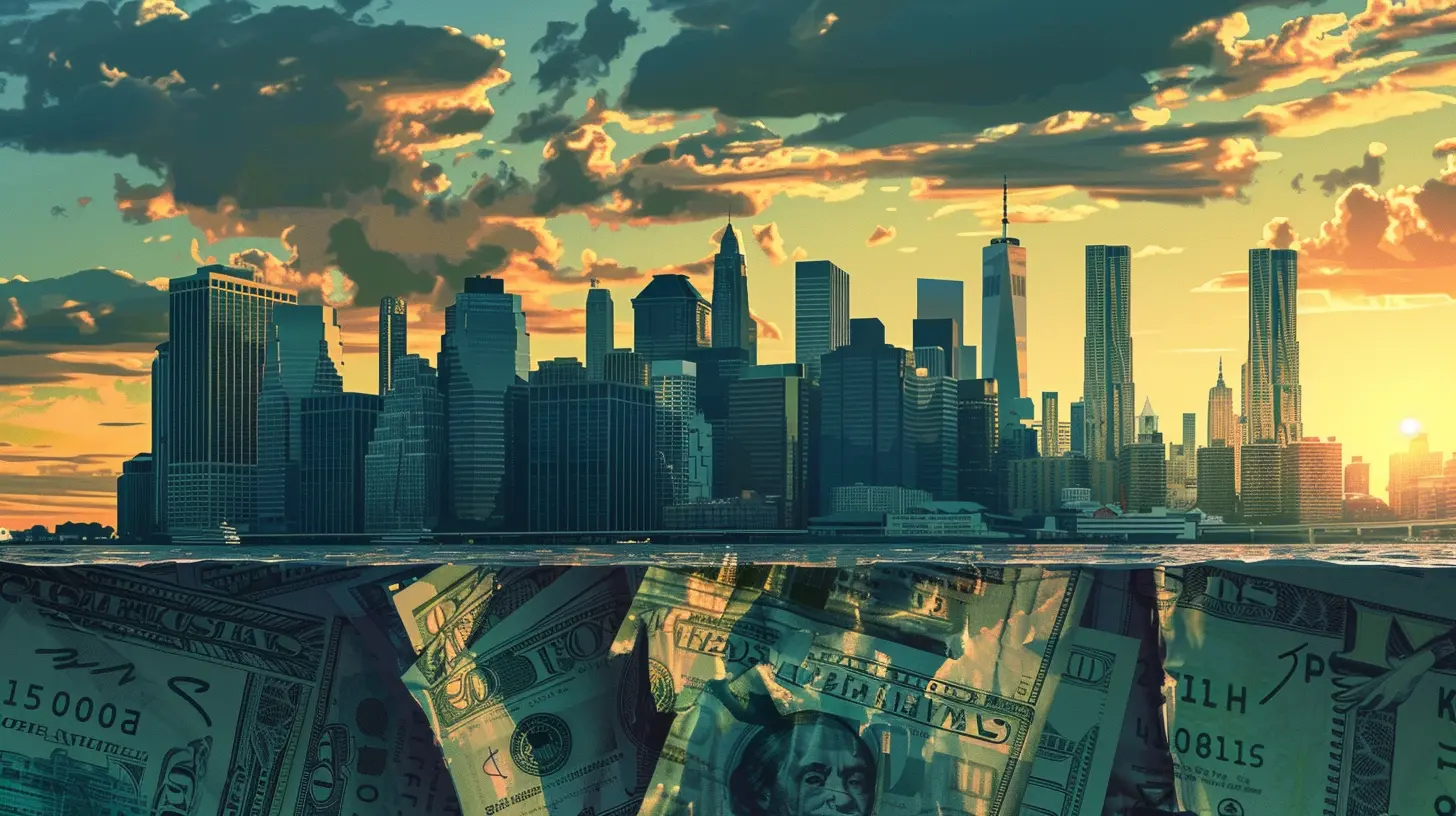
Why Should You Care?
You might be thinking, “Okay, the rich have more. But if I’m doing okay, why worry?”Fair question. But here’s the catch: a strong middle class lifts everyone. When the middle class is healthy, people spend more, buy homes, start businesses, and pay taxes. That fuels the economy.
When most people are strapped for cash, they cut back. That means fewer customers for businesses, more strain on government programs, and less innovation.
It’s like having a car with a flat tire. Sure, it might still run, but not for long—and definitely not well.
The Ripple Effects of Income Inequality
Let’s zoom out for a second. Income inequality isn’t just an economic issue—it’s a social one too.1. Less Mobility, More Stagnation
In a fair system, you work hard, you get ahead. But today? People are finding it harder to climb the income ladder. Your zip code, your parents’ income, even your race can all strongly influence your financial future.2. Fractured Communities
When economic gaps widen, so do social ones. Wealthy neighborhoods have better schools, cleaner parks, and safer streets. Poorer areas often lack those resources, creating cycles of disadvantage.3. Political Polarization
Here’s a biggie: when people feel left behind, frustrated, and unheard, they're more likely to lose faith in the system. That disillusionment can lead to political upheaval, extremism, or apathy—none of which are good for a functioning democracy.Can We Fix It?
Absolutely. But it won’t happen overnight, and it won’t happen without intention. Here are a few paths forward:1. Raise the Minimum Wage
It’s a hot topic, sure. But the current federal minimum wage hasn’t kept up with inflation. Increasing it could help millions of families make ends meet.2. Invest in Education and Training
Not just college—trade schools, apprenticeships, and workforce training too. Giving people the tools to succeed means more upward mobility.3. Strengthen Worker Protections
From fair schedules to paid leave, many workers are operating without a safety net. Better protection = more security = a healthier middle class.4. Tax Reform
Make the tax code more equitable. That could mean taxing wealth more fairly, closing loopholes, or adjusting how capital gains are handled.5. Affordable Housing, Healthcare, and Childcare
These are basic needs that eat up a huge portion of middle-class budgets. Making them more affordable frees up income and reduces stress.Don’t Lose Hope
It’s easy to feel overwhelmed by the numbers, the policies, and the politics. But remember this: change is always possible—especially when people understand the problem and start demanding solutions.Talk to your friends, vote wisely, support local businesses, and stay informed. These might seem like small acts, but together they matter.
We all have a stake in restoring a thriving, vibrant middle class. Because at the end of the day, a society where most people are doing okay—not just scraping by—is a better, safer, and more enjoyable place for everyone.
Final Thoughts
The growing gap between the haves and have-nots isn't just a statistic—it’s a reality many live every day. And it's not "just how things are." It's the result of decades of policy choices, economic changes, and shifting priorities.But we’re not powerless. By understanding what's happening and pushing for fair, thoughtful solutions, we can build a future where the middle class isn’t a relic of the past, but a foundation for growth, opportunity, and shared prosperity.
So yeah—it’s time to stop cutting the pizza unevenly and start making sure everyone at the table gets a fair slice.
all images in this post were generated using AI tools
Category:
Income InequalityAuthor:

Zavier Larsen
Discussion
rate this article
1 comments
Samira McClary
This article presents a crucial perspective on income inequality and its impact on the middle class. It's important to address these issues thoughtfully, as the health of our economy relies on a balanced and thriving middle class for sustainable growth.
August 21, 2026 at 2:56 AM
Zavier Larsen
Thank you for your thoughtful comment. I agree that addressing income inequality is essential for the middle class and the overall health of the economy. It's a challenging but necessary conversation.