Introduction to Day Trading Leverage and Margin Risks
27 February 2026
Day trading—sounds exciting, right? You’re in and out of trades within minutes or hours, potentially raking in profits before lunchtime. It’s fast, thrilling, and full of opportunity. But let’s pump the brakes for a second. Because before you jump into this adrenaline-fueled world, there’s a key concept you need to wrap your head around: leverage and margin.
These two tools can supercharge your gains. But—and here’s the kicker—they can also drain your account faster than you can say "market volatility." In this article, we’re going to break down what leverage and margin really mean in the context of day trading, why they're so tempting, and the risks most traders overlook.
Grab a cup of coffee (or something stronger), and let’s get real about day trading leverage and margin risks.
What Is Leverage in Day Trading?
Alright, let’s start with the basics.Leverage is like borrowing money to increase the size of your trade. Think of it as using a megaphone in a conversation; it amplifies everything—your voice, but also your mistakes.
In trading terms, if you’re using 10:1 leverage, for every $1 of your own money, you control $10 in the market. That sounds awesome, right? More control, more profit potential.
But here’s the catch: if your trade goes against you, losses pile up just as quickly. It’s like walking a financial tightrope without a safety net.
Real-Life Analogy
Imagine you’re betting on a horse race. You’ve only got $100, but someone offers to front you $900 more. Now, you're betting with $1,000 total. If your horse wins, you keep a big chunk of the winnings. If it loses? You're paying back that borrowed money, even though the race didn’t go your way.That's leverage.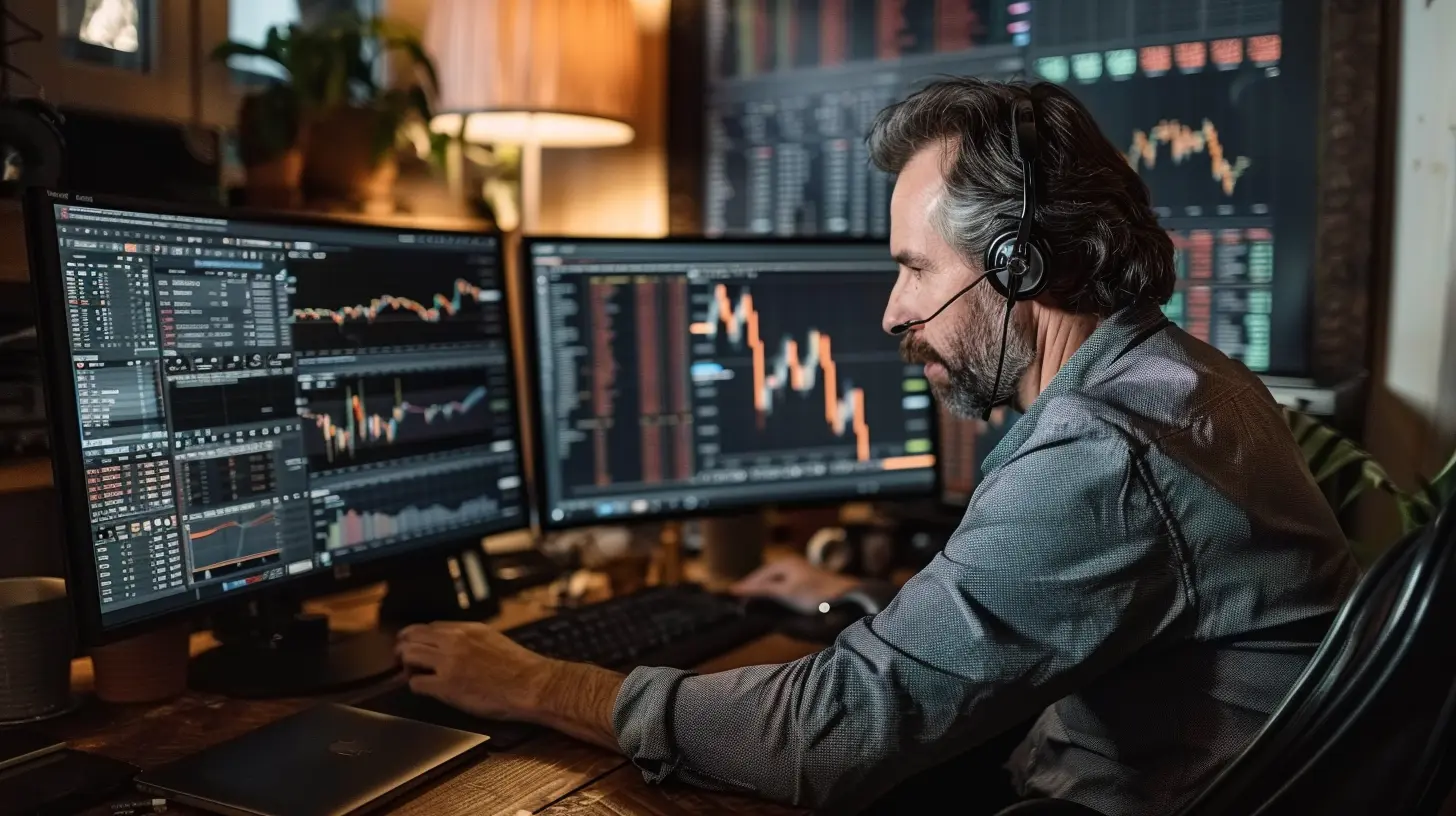
What Is Margin?
Leverage and margin go hand in hand—they’re two sides of the same financial coin.When you trade on margin, you're essentially borrowing funds from your broker to open a larger position than your account balance would allow. The margin is the collateral your broker requires to open and maintain those leveraged trades.
Let’s say you want to buy $50,000 worth of stock, but you only have $10,000. Your broker might allow you to put down that $10,000 as margin and borrow the remaining $40,000.
Sounds fair, right? You're using your own money to gain access to more capital. But here's the catch: if this trade moves south, your broker isn’t going to sit around and hope things improve.
The Margin Call: Every Trader’s Nightmare
Now let’s talk about what happens when things go wrong.Ever heard of a margin call? It’s probably one of the most dreaded phrases in the trading world. If the market moves against you and your account value falls below a certain threshold, your broker might demand that you deposit more money to cover your losses.
And if you don’t? They can liquidate your position—possibly at the worst time—to protect their money.
Yep, your trade gets closed whether you like it or not. And guess who’s left holding the bag?
You are.
The Allure of Leverage: Why Traders Love It
Let’s be honest. The reason leverage is so popular is simple: it can make you a lot of money—fast.When it works, leverage makes you feel like a genius. A small price movement in your favor can turn into a significant profit, especially if you’re trading volatile assets like forex, crypto, or small-cap stocks.
Here’s an example:
- Say a stock moves 2% in your favor.
- With no leverage, on a $1,000 trade, that’s a $20 gain.
- With 10:1 leverage? You’re looking at $200.
That’s the kind of math that makes traders' eyes light up.
But remember: the market isn’t a one-way street. What goes up can come down…and fast.
The Double-Edged Sword of Leverage
Let’s flip that example on its head.If that same stock moves 2% against you, your $1,000 account could lose $200. That’s a 20% hit in minutes. Imagine a couple more losing trades like that. You could wipe out your account in a single trading session.
That’s the brutal reality of leverage. It amplifies gains—and magnifies losses.
There’s a saying among experienced traders: _“Leverage gives, and leverage takes away.”_ And boy, does it take.
Managing Margin Risks: Tips from the Trenches
So, how do you ride the wild horse of leverage without getting thrown off?Here are a few practical tips:
1. Use Stop-Loss Orders Religiously
Don’t ever—and we mean ever—enter a trade without a clear exit plan. A stop-loss helps limit your downside if the trade goes south. It won’t protect you from massive gap-downs, but it’s a solid line of defense.2. Don’t Use Maximum Leverage
Just because your broker offers 50:1 leverage doesn’t mean you should use it. Start with small leverage—maybe 2:1 or 3:1—until you truly understand how the market behaves.3. Keep Your Emotions in Check
Leverage plays with your brain. Big swings can lead to panic or overconfidence. Stick to a strategy, and don’t let FOMO (Fear of Missing Out) or revenge trading get the best of you.4. Maintain a Healthy Margin Level
Watch your margin level like a hawk. If your equity dips close to the maintenance margin, reduce your positions. Don’t wait for a margin call—it’s like waiting for the fire alarm instead of smelling smoke.5. Use a Demo Account First
Seriously, don’t even think about trading real money with high leverage until you’ve practiced on a demo account. Get a feel for how trades move, understand the risks, and only then up the ante.Regulatory Framework and Broker Rules
Different countries and brokers have different rules when it comes to leverage and margin.For example:
- In the U.S., the SEC and FINRA limit leverage in retail day trading accounts to 4:1 intraday.
- In Europe, thanks to ESMA regulations, the max leverage for retail clients is often capped at 2:1 or 30:1 depending on the asset.
Some offshore brokers might offer absurd amounts of leverage—100:1, 500:1, even 1000:1. Sound tempting? Be careful. These brokers often operate in loosely regulated jurisdictions, and you might be taking on more risk than you realize.
Always read the fine print.
Leverage and Margin in Different Markets
Not all markets are created equal when it comes to leverage and margin.Here’s a quick breakdown:
Forex
Highly leveraged. Brokers may offer 50:1 or more. Moves are smaller, so leverage can help… or hurt.Stocks
Usually lower leverage, and it depends on if you’re labeled a pattern day trader (with $25k+ in your account) under U.S. rules.Futures
Leverage is built-in to the contract size. You’re effectively trading on margin without calling it that.Crypto
This is where things get wild. Platforms like Binance and BitMEX offer 100x leverage. That means a 1% move in the wrong direction… and you’re liquidated.The Bottom Line: Is Leverage Worth It?
Here’s the truth: leverage isn’t evil. It’s just a tool. But like any powerful tool—think chainsaw or flamethrower—it needs to be handled with care.Some traders use it effectively and profitably. But those traders usually have years of experience, iron discipline, and robust risk management strategies.
If you’re just starting out in day trading, approach leverage and margin with caution. Test strategies. Start small. Prioritize capital preservation over big wins.
Because in trading, staying in the game is half the battle.
Final Thoughts
Leverage can make or break you. Margin can open doors—or shut them in your face.Before diving headfirst into day trading with borrowed capital, take a step back and really learn the ropes. Understand how these financial mechanisms work. Respect the risks. And remember: speed and power are nothing without control.
Use leverage like a scalpel, not a sledgehammer.
Because in the high-stakes world of day trading, the difference between profit and pain often comes down to one word: discipline.
all images in this post were generated using AI tools
Category:
Day Trading BasicsAuthor:

Zavier Larsen
Discussion
rate this article
2 comments
Kirk Wilkerson
Great overview of day trading leverage and margin risks! Understanding these concepts is crucial for managing potential losses and maximizing profits. It’s essential for traders to stay informed and make educated decisions to navigate the complexities of the market effectively.
March 17, 2026 at 3:27 AM
Zavier Larsen
Thank you for your feedback! I'm glad you found the overview helpful—staying informed is indeed key to successful trading.
Velvet Fields
Understanding margin risks is crucial; over-leveraging can lead to devastating financial consequences for traders.
February 27, 2026 at 4:43 AM
Zavier Larsen
Absolutely! It's essential for traders to grasp margin risks and avoid over-leveraging to protect their investments.