Is Capitalism Broken? Income Inequality and Capital Distribution
28 June 2026
Let’s face it—any time you turn on the news or scroll through social media, it seems like the rich are getting richer while everyone else is… well, trying to keep their head above water. It gets you thinking: is the system we’ve relied on for decades—good old capitalism—starting to crack under pressure?
Capitalism has been the engine of incredible progress. No doubt about that. It’s given us tech revolutions, millionaires-turned-billionaires, and an economy that many would argue is the envy of the world. But here’s the big question: if it’s so great, why are income inequality and capital distribution growing problems?
In this post, we’re going to take a deep dive into that very question. We’ll look at how capitalism works, where it might be failing, and what it all means for regular folks like you and me.
What Is Capitalism Anyway?
Before we get into whether it’s broken, let’s break down the basics.Capitalism is an economic system where private individuals or businesses own capital goods. The production of goods and services is based on supply and demand in the general market—what economists call a market economy—rather than through central planning (like in socialism or communism).
Sounds fair enough, right? You work hard, you get paid. You invest wisely, you profit. But here’s the catch: not everyone starts from the same place, and not everyone has the same access to opportunities.
Income Inequality: A Growing Chasm
Let’s talk numbers for a sec. According to data from economists and researchers around the globe, the top 1% control more wealth than the bottom 90% combined. Yeah, you read that right. And that gap? It’s getting wider.Why Is This Happening?
1. The Boom of Tech and Finance- These sectors have skyrocketed in value over the last few decades. The problem? They often reward a very small number of people—mainly investors, executives, and elite professionals.
2. Globalization
- While opening up trade has lifted millions out of poverty worldwide, it’s also led to many manufacturing jobs in wealthier countries being outsourced—leaving certain working-class communities behind.
3. Education Gaps
- Higher education often leads to higher-paying jobs. But access to quality education isn't equal, leading to an avalanche effect where the rich can afford better schools and better opportunities for their kids.
4. Tax Policies
- In many capitalist countries, tax laws often favor the wealthy. Loopholes, lower capital gains tax rates, and corporate tax breaks can mean billionaires pay lower effective tax rates than middle-class workers.
Capital Distribution: Who Owns What?
Let’s unpack what we mean by "capital distribution." Simply put, it’s about who owns the stuff that makes money—businesses, real estate, stocks, and so on.Guess What? The Wealthiest Own Almost All the Capital
Here’s the kicker: working for a wage only gets you so far. True wealth comes from owning capital. Think about it—stocks rise, rental properties cash in, businesses grow in value. If you don’t own any of those, you're playing catch-up in a race that’s already started.This isn't just about luxury living. Ownership gives you security, influence, and the freedom to make choices. Without it, most people live paycheck-to-paycheck, vulnerable to economic shocks like job losses or health emergencies.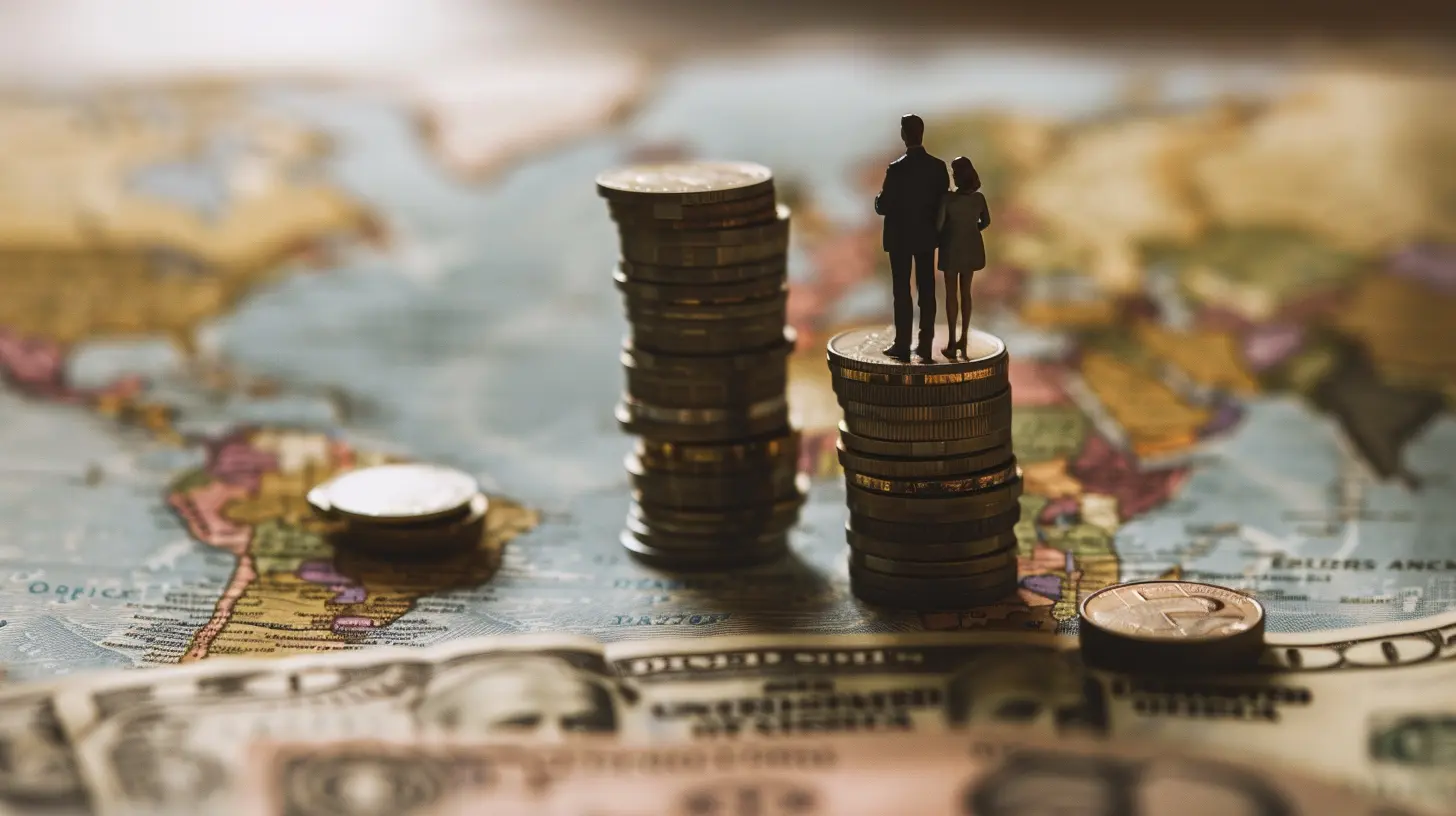
So… Is Capitalism Broken?
Alright, let’s get to the meat of it. Is capitalism actually broken?Well, it depends on how you define “broken.”
On one hand, capitalism undeniably drives innovation, fuels competition, and creates economic growth. On the other hand, if it leaves a huge portion of the population struggling while a handful reap the rewards, is it really working?
Here’s the crux: capitalism is like a car. It’s got a powerful engine, but if it’s not maintained—if the brakes are shot, the tires are bald, and the fuel only goes to the people in the front seat—sooner or later, it’s gonna crash.
A System Built for Growth, Not Fairness
Let’s be really honest here: capitalism was never designed with equality in mind. It’s all about efficiency, competition, and profit. If someone figures out how to outperform everyone else, they win big. That’s the game.But life isn’t a game of Monopoly. People have families, bills, health issues, and responsibilities. When profits come at the cost of people, that’s when the system starts showing cracks.
Signs the System Needs a Tune-Up
So maybe it’s not entirely "broken," but it seriously needs an update—like your old phone that won’t stop freezing. Here are some red flags:1. Wages Aren’t Keeping Up With Productivity
In the past, if workers were more productive, they usually earned more. Not anymore. Productivity has shot up, but wages have mostly flatlined. That gap? It’s going straight into executive bonuses and shareholder payouts.2. The Cost of Living Is Exploding
Housing, healthcare, and education have gotten ridiculously expensive in many places, while wages lag behind. That’s squeezing the middle class like never before.3. Gig Economy = No Safety Net
Sure, you can drive for Uber or freelance online. But where’s the health insurance, retirement plan, or job security? It's like building a house of cards—one gust of bad luck and you're toast.What Can Be Done?
We’re not here to throw capitalism into the trash bin. But maybe it’s time to upgrade it—give it a software patch. Here are a few ideas being tossed around:Wealth Taxes
Some economists and politicians are proposing taxes on extreme wealth—not just income. That means billionaires would pay a small portion of their total wealth every year to help fund public services.Universal Basic Income (UBI)
The idea is simple: give everyone a basic income, no strings attached. That way, even if robots take your job (which, let's be real, is happening in some industries), you're not left high and dry.More Progressive Tax Structures
This doesn’t mean taxing everyone more—it means taxing the ultra-wealthy more fairly. Not punitively, just proportionally. It’s about evening out the playing field a bit.Encouraging Employee Ownership
If more workers had a stake in the companies they work for, they’d share in the success. Some companies already do this, and it’s a win-win: happier employees and more loyalty.Education Reform
Bridging the education gap is crucial. Better access to quality education can be a great equalizer, opening doors that were previously slammed shut for many.Can Capitalism Be More Compassionate?
Let’s not kid ourselves—capitalism isn't going anywhere. But can we make it kinder? More balanced? More inclusive?Think of it like baking. If the original recipe leaves half the people hungry while one guy eats the whole cake, maybe it’s time to tweak the ingredients.
That doesn’t mean abandoning competition or innovation. It just means ensuring the rewards don't flow to only a select few. It means leveling the starting line so everyone has a fair shot at running the race.
Final Thoughts: We The People, Not Just The Profits
At the end of the day, capitalism is a tool. It’s not good or bad—it’s how we use it that matters. If we let it run wild without guardrails, it can cause serious damage. But if we’re smart, compassionate, and proactive, we can reshape it to serve more of us—not just the lucky few.So, is capitalism broken? Maybe not completely. But if we don’t address income inequality and skewed capital distribution soon, we might find ourselves stuck in a system that only works for a shrinking slice of society.
And that’s not just unfair—it’s unsustainable.
all images in this post were generated using AI tools
Category:
Income InequalityAuthor:

Zavier Larsen
Discussion
rate this article
1 comments
Brittany Whitley
If capitalism is broken, it's time for a serious tune-up. Let's fix the flaws!
June 28, 2026 at 11:25 AM
Zavier Larsen
I agree that addressing flaws is essential. Reform can lead to a fairer system that benefits everyone. Let's explore how we can make meaningful changes.