Navigating the Financial Landscape in 2027 and Beyond
16 April 2026
We stand on a shoreline, you and I, watching the financial tides of today recede. They pull back, revealing unfamiliar contours, strange new creatures glinting in the sun, and pathways we never knew existed. The horizon of 2027 isn’t a distant mirage; it’s a reality being built, byte by byte, policy by policy, and heartbeat by heartbeat. To navigate it is to learn a new language of value, to map a terrain where the very soil—money itself—is being transformed. This isn't just about new gadgets or apps; it's a fundamental shift in the geography of our economic lives. So, let’s take a deep breath and step forward together. Let’s chart this new world, not with fear, but with the curious eyes of explorers.

The New Soil: Digital Currencies and the Re-imagining of Money
Imagine money not as paper in your hand, but as a river of light. That’s the foundational shift awaiting us. By 2027, the concept of currency will have fractured and evolved into a spectrum of possibilities.Central Bank Digital Currencies (CBDCs) will likely be a reality for major economies. Think of these not as volatile cryptocurrencies, but as digital versions of your nation’s currency, issued and backed by the central bank. Your phone becomes your wallet, but with a profound difference: the potential for programmable money. Imagine a tax refund that automatically arrives, or a business grant that can only be spent on equipment, ensuring it fuels growth as intended. It’s money with a memory and a mission. This brings immense efficiency but also asks us profound questions about privacy and the role of the state in our daily transactions.
Alongside this official digital stream, the ecosystem of cryptocurrencies and stablecoins will have matured, not vanished. The wild storms of speculation will have given way to calmer, deeper currents. We’ll see assets like Bitcoin potentially acting as a "digital gold"—a decentralized store of value in a fragmented world. Stablecoins, pegged to real-world assets, will become the smooth rails for global commerce, allowing a designer in Lisbon to be paid instantly by a client in Singapore, with fees that don’t bite like a winter wind. Money becomes fluid, borderless, and, in many ways, smarter.
But here’s the poetic twist: this doesn’t spell the end of physical cash, not entirely. It will become like vinyl records—not the most efficient, but cherished for its tactile authenticity, its anonymity, its human feel in a digital age. The landscape won’t have one type of soil; it will have many, and we’ll learn to walk on all of them.

The Cartographers: AI, Personalization, and the End of One-Size-Fits-All Finance
If money is the new soil, then Artificial Intelligence is our personal cartographer. Gone are the days of static, paper maps (those generic financial plans). By 2027, your financial guide will be a dynamic, living entity.Picture this: an AI that doesn’t just track your spending, but understands your life’s rhythm. It knows the cadence of your freelance income, the looming cost of your child’s education, your dream of a sabbatical to write a novel. It synthesizes global market data, geopolitical tremors, and even climate-related financial risks into a coherent, personal narrative. It won’t just tell you what to do; it will explain the why, in a calm, conversational tone. “Given the projected shift in energy markets and your goal to reduce your carbon footprint, here’s a gradual re-allocation for your portfolio,” it might suggest.
This is hyper-personalization. Investment, insurance, lending—all will be tailored not to a demographic, but to you. Your unique risk fingerprint, your values (want to invest only in companies with strong sustainability practices? Done.), your life path. It turns finance from a cold calculus into a collaborative art form. But who holds the brush? We must remain the artists, with AI as our insightful assistant. The relationship is key; we must provide the soul, the dreams, the ethical compass, while it provides the pattern recognition and computational might. It’s a partnership, not a surrender.

The Climate of Value: ESG and the Rise of Conscience Capital
The financial weather of the future will be inextricably linked to the literal weather. The era of viewing environmental, social, and governance (ESG) factors as a "nice-to-have" sidebar is over. By 2027, they will be the central barometer for measuring risk and opportunity.Investing will become an act of world-building. Capital will flow like water to the seeds of the future: renewable energy projects, regenerative agriculture, companies building resilience. Conversely, assets tied to the old, extractive world will find themselves stranded, like dinosaurs in a cooling climate. This isn’t just idealism; it’s ruthless financial logic. A factory prone to flooding is a bad bet. A company with poor labor practices is a reputational time bomb.
Your portfolio will become a statement, a garden you cultivate. You’ll be able to track not just its financial yield, but its impact yield—the carbon sequestered, the communities empowered, the governance transparency achieved. Finance sheds its gray suit and puts on the clothes of a steward. The question shifts from "What can I get?" to "What world am I creating with my wealth?" This moral dimension will be the most powerful current in the new landscape, reshaping corporate behavior and investor priorities from the ground up.
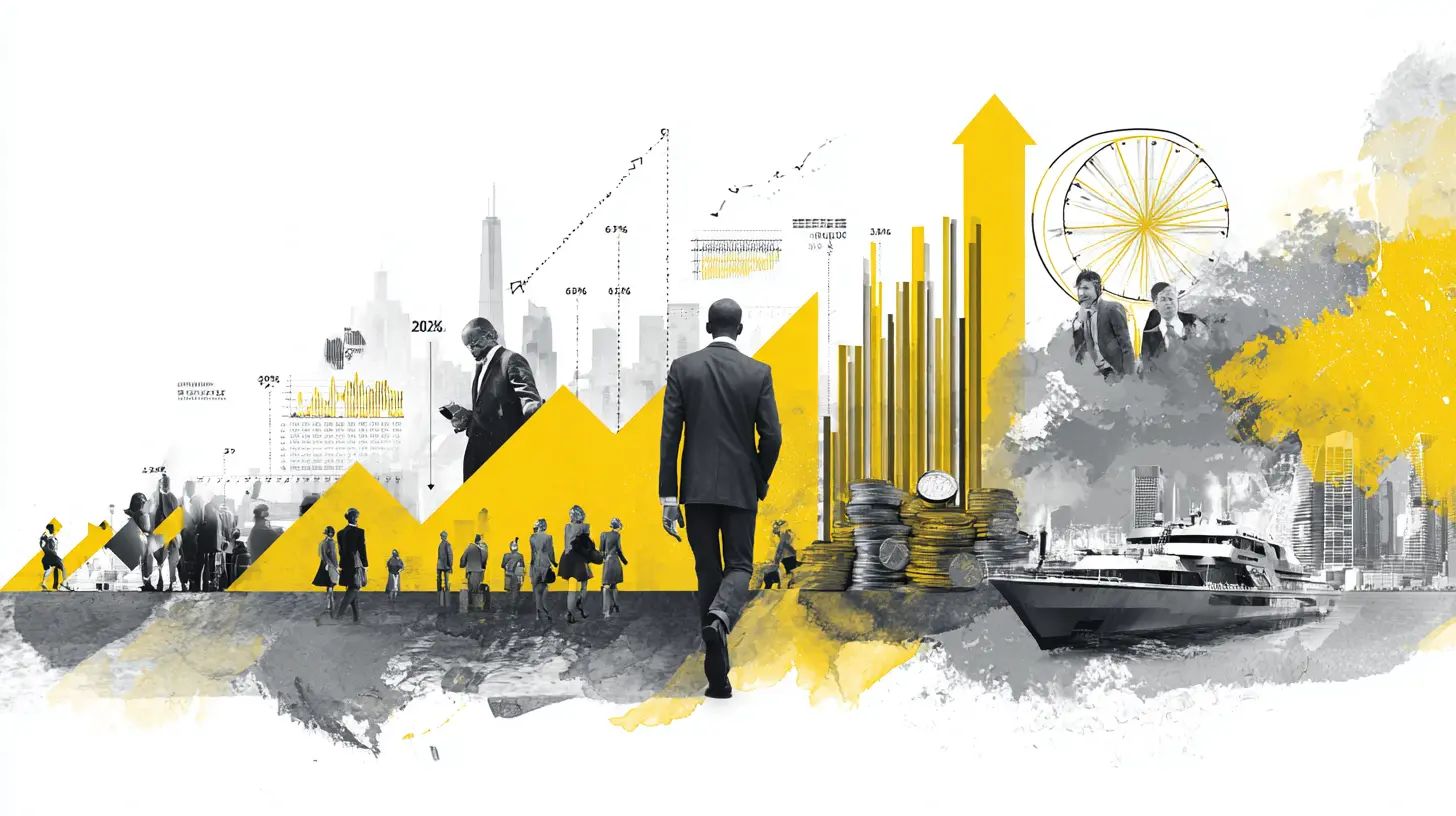
The Shifting Tectonic Plates: Geopolitics and the Fragmentation of Systems
Our new landscape isn’t forming on a stable, peaceful continent. The tectonic plates of global power are grinding against each other. The unified, dollar-dominated financial system of the late 20th century is giving way to something more fragmented, more regional.We may see the rise of digital currency blocs. A digital Euro zone, a digital Yuan area, each with its own rules, its own technological standards, and its own geopolitical allegiances. Cross-border finance will require new skills—navigating these digital borders, understanding different regulatory skies. Sanctions and economic statecraft will be executed with digital precision, freezing assets across ledgers in an instant.
For you, the individual, this means diversification takes on a new meaning. It’s not just diversifying asset classes, but potentially diversifying across systems and digital jurisdictions. It means being aware that your financial security is intertwined with global stability. Our personal maps must now include these larger, shifting plates, understanding that a tremor in one region can send waves through the entire digital ecosystem.
The Human Heart in a Digital World: Skills, Mindset, and Community
With all this talk of AI, digital streams, and global systems, where does the human being fit in? We are not obsolete. We are the source.The essential skills for 2027 are less about crunching numbers (our AI cartographer does that) and more about navigational wisdom. They are:
* Digital Financial Literacy: Understanding the basics of blockchain, digital wallets, and data privacy isn’t for techies—it’s as essential as balancing a checkbook was for our grandparents.
* Adaptive Resilience: The landscape will change. The ability to learn, unlearn, and relearn will be your most valuable asset. Comfort with ambiguity is key.
* Critical Thinking: In an age of AI-generated advice and deepfake financial gurus, the ability to question, verify, and think for yourself is your shield.
* Values Clarification: Knowing what you truly value—security, impact, freedom, legacy—will be the compass that guides all your automated tools.
Furthermore, community will re-emerge as a financial force. Decentralized Finance (DeFi) protocols, despite their current growing pains, point to a future of peer-to-peer lending, community-owned investment pools, and collective bargaining for financial products. We may return to tribal notions of wealth, but our tribe will be global, connected by shared values and secure digital handshakes.
Building Your Vessel for the Voyage
So, how do you build your ship for 2027?1. Start with Your Compass (Your Goals): All the technology in the world is useless without direction. What is your vision for 2027? Write it down. Feel it.
2. Embrace the Tools, Don’t Worship Them: Begin experimenting with digital wallets. Follow the developments in CBDCs in your country. Use a robo-advisor, but spend time understanding its logic. Be a curious user.
3. Weave Impact into Your Fabric: Audit your current investments and bank. Do they align with the world you want to see in 2027? Shifting even a portion is a powerful act.
4. Fortify Your Digital Self: Cybersecurity is no longer an IT issue; it’s personal finance 101. Strong, unique passwords, two-factor authentication, and a healthy skepticism are your hull’s armor.
5. Cultivate Lifelong Learning: Dedicate time each month to learn. Listen to a podcast on fintech, read an article on sustainable finance. Make understanding this new landscape a pleasurable habit, not a chore.
Conclusion: Sailing the Dawn
The financial landscape of 2027 is not a dystopian wasteland of cold algorithms, nor a utopian paradise of effortless wealth. It is a rich, complex, and living geography. It has deep forests of data, rivers of digital currency, mountains of regulatory change, and the ever-present climate of global risk.To navigate it is to embark on the greatest adventure of our economic lives. It asks us to be brave, to be thoughtful, to be continuous learners. It asks us to merge the best of our human hearts—our dreams, our ethics, our community spirit—with the powerful tools we are creating.
So, let us set sail not with trepidation, but with a sense of profound possibility. The map is being drawn as we travel. And we, with our hopes as our North Star and our awakened consciousness as our sail, are the ones drawing it. The horizon of 2027 awaits. Let’s navigate it, together.
all images in this post were generated using AI tools
Category:
Financial RulesAuthor:

Zavier Larsen
Discussion
rate this article
2 comments
Kristina McKellar
In tides of change, wise minds steer clear; financial dreams flourish when vision's near.
April 20, 2026 at 12:42 PM
Zavier Larsen
Thank you for your insight. Vision is indeed key to thriving in the evolving financial landscape.
Oriana Lane
Timely insights; prepare wisely.
April 20, 2026 at 4:36 AM
Zavier Larsen
Thank you! Planning ahead is crucial for financial success.