The Importance of Risk Management in Day Trading
19 December 2025
So, you’ve decided to tango with the beasts of Wall Street. You’re dipping your toes into the lightning-paced world of day trading, huh? That’s awesome—and a bit nerve-wracking, if we’re being honest. But before you start throwing money at charts like a caffeinated gambler in Vegas, there’s one thing you absolutely, positively need to master: risk management.
Don’t roll your eyes just yet. I promise this isn’t the boring fine print stuff. Think of risk management as your financial seatbelt. Sure, you might never crash, but when you do (and oh, you will), you’ll be glad you were strapped in. Ready? Let’s unpack why risk management isn’t just important in day trading—it’s the whole darn parachute.
🚀 The Chaos That Is Day Trading
Let’s start with a little real talk.Day trading is like trying to surf during a hurricane. Prices move in the blink of an eye, charts go up, down, sideways, and sometimes do loopty-loops just for fun. It’s exciting, sure. But it can also gut your bank account faster than you can say “bull market.”
What separates the winners from the wiped-out? It’s not fancy algorithms or psychic-level prediction skills. It’s something way less glamorous: managing risk.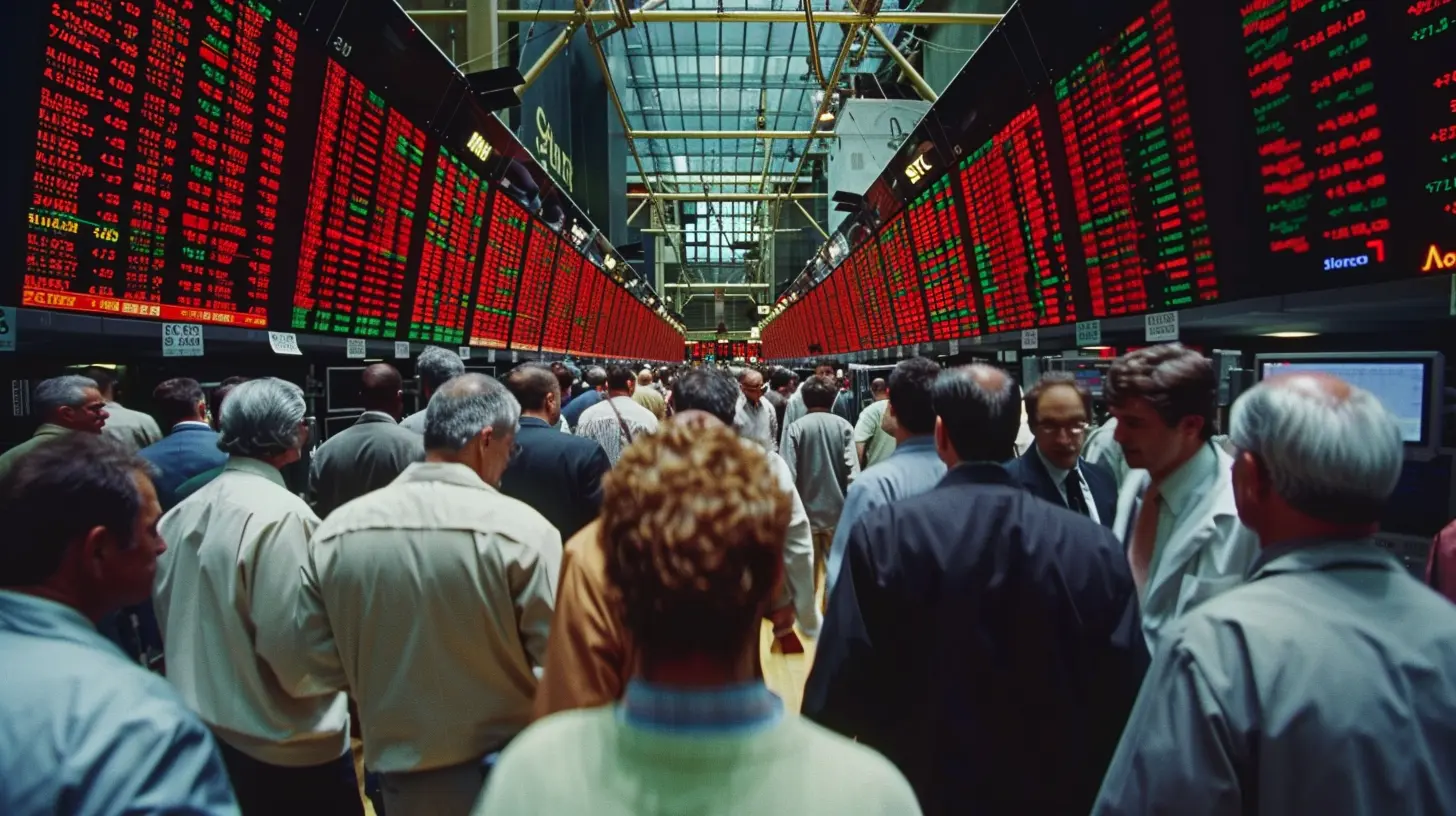
🧠 What Even Is Risk Management?
Glad you asked.Risk management is the process of identifying, assessing, and reducing the dangers to your account balance. It’s your game plan for protecting capital while still staying alive long enough to hit those juicy trades.
Think of it like this: your trading account is your spaceship. Risk management is the shield. Without it, one bad meteor (aka a bad trade) and boom—game over.
🤔 Why So Many Traders Skip It (And Why That’s Dumb)
Here’s a sad but true fact: most beginner traders treat risk management like flossing. They know they should do it, but meh… it’s not fun, so they don't.The logic (if you can call it that) goes something like:
> “I’ve got a solid strategy. Risk management is just slowing me down!”
Or
> “I’m going to double my account this week. Why worry?”
Here’s the truth bomb—they’re wrong. It doesn’t matter how amazing your strategy is. Without proper risk management, you’re just a couple of bad trades away from a financial faceplant.
💡 The “1% Rule” – Your New Best Friend
Let’s get practical.One of the golden rules in day trading is this: never risk more than 1% of your trading capital on a single trade.
So if you’ve got $10,000 in your account, the most you should be willing to lose on any one trade is $100. Not $1,000, not $500. Just $100.
Why? Because even if you lose several trades in a row (and believe me, you will), your account survives. It’s about staying in the game. You can’t win if you’re wiped out.
💥 The Power of the Stop-Loss
Ever gone into a store for “just one thing” and walked out with a cart full of stuff and $200 lighter?That’s what trading without a stop-loss feels like—every single bad decision snowballs until you're left wondering where it all went wrong.
A stop-loss is a predefined exit point. It’s you saying, “If this trade goes against me, I’m out—no questions, no emotion, no revenge trading.”
Pro tip: Always set your stop-loss the moment you enter a trade. This is non-negotiable.
📊 Position Sizing – Don’t Go All In, Cowboy
Position sizing is how much of a particular asset you buy or sell. And oh boy, it matters more than most new traders think.Too many people go all-in like they’re playing poker. The market is not impressed with your bravado.
Proper position sizing ensures that even if a trade goes south, it won’t wreck your entire portfolio. Remember your buddy, the 1% rule? It ties directly into your position size.
🧮 Expectancy: The Math That Actually Matters
Alright, let’s get a bit nerdy (not too much, promise).Trade expectancy is the formula that tells you whether your strategy makes money over time. The basic formula is:
> (Winning % x Average Win) – (Losing % x Average Loss)
If your expectancy is positive, congrats—your system has the potential to be profitable.
Why does this matter for risk management? Because even with a mediocre win rate (like 50%), you can be profitable if your wins are bigger than your losses. That’s only possible through—you guessed it—solid risk control.
😬 Emotional Rescue: Controlling Those Inner Demons
You know what's harder than spotting a candlestick pattern?Controlling your emotions.
Greed, fear, hope, panic—they show up like uninvited guests at your money party. Risk management helps quiet them down. It gives you rules, structure, and most importantly, objectivity.
When you know exactly how much you’re willing to lose before even clicking “buy,” there’s no room for panic. You’re calm, collected… a Zen master with a mouse.
⏱ Trading Timeframes and Risk: A Love-Hate Relationship
The shorter your timeframe, the more volatile and unpredictable trades become. That’s why day traders need to be even more careful with risk.Scalping? You need tighter stop-losses and lightning-fast decision-making.
Swing trading? You can afford to give price a little breathing room.
In both cases, you must tailor your risk management to your style. One size? Does NOT fit all.
📉 Losses Are Inevitable (And That's Okay)
Let me give it to you straight: you're going to lose money. Not always, not forever—but it’s part of the game.The trick is minimizing damage during the bad streaks so that you’re around to capitalize during the good streaks. That’s what risk management is all about. It doesn’t eliminate losses—it makes them survivable.
Think of it this way: professional boxers don’t try to avoid every punch—they just make sure none of them are knockouts.
🧪 Backtesting and Paper Trading: Your Risk-Free Training Ground
Before you throw real money into live markets, spend time backtesting your strategy and paper trading like your life depends on it.This is where you learn how to manage risk in real scenarios—without the real pain.
Treat paper trading seriously. Use the same stop-losses, position sizes, and rules you would in real trades. If it doesn’t work in simulation, it won’t magically work with your life savings.
✍️ Create a Trading Plan (And Actually Follow It)
“Winging it” might work for karaoke. It’s suicide in trading.A good trading plan includes:
- Entry/exit rules
- Stop-loss placement
- Risk per trade
- Position sizing
- Market conditions to avoid
- Mental state checklist
With a plan in hand, your trading becomes systematic, not emotional. You’re now acting like the CEO of your portfolio—not a Vegas tourist.
📵 No Plan B? Then Don't Trade
Day trading isn’t a side hustle you can do with spare change.If you’re trading without paying attention to risk, you’re not trading—you’re gambling, plain and simple.
Risk management is your Plan B, your safety net, your Plan C through Z. It's what keeps you from blowing up your account and throwing your laptop out the window.
🧘♂️ Final Thoughts: Trade Like a Monk, Not a Maniac
Here’s a crazy idea: what if you traded less, risked less, and actually ended up making more?Let that simmer.
Day trading isn’t about hitting grand slams every day. It’s about playing solid defense, protecting your capital, and letting base hits compound into major wins.
So slow down, set your stops, size your positions right, and remember: risk management isn’t optional—it’s essential.
Trade safe out there, my friend. The markets will be wild. Be wilder—in a smart way.
📝 TL;DR – Because You’ve Got Charts to Check
- Day trading is risky AF—risk management is your shield.- Never risk more than 1% of your capital per trade.
- Use stop-losses like your life depends on it (it kinda does).
- Don’t go all-in! Use correct position sizing.
- Expect losses, control them, and you’ll survive long enough to thrive.
- Backtest, paper trade, and stick to a solid plan, always.
all images in this post were generated using AI tools
Category:
Day Trading BasicsAuthor:

Zavier Larsen
Discussion
rate this article
2 comments
Dominic McNab
Risk management isn't optional; it's essential. Without it, day trading is just gambling—volatile, reckless, and bound for disaster.
February 4, 2026 at 4:44 AM
Zavier Larsen
I completely agree! Effective risk management is crucial for long-term success in day trading, transforming it from mere gambling into a strategic investment approach.
Thornewood Spencer
Great insights! Risk management is crucial for successful day trading.
December 24, 2025 at 3:25 AM
Zavier Larsen
Thank you! I'm glad you found it insightful—risk management is indeed key to success in day trading!